hommes 002 | Framed Vintage Photo - Matte Canvas
Couldn't load pickup availability
Hommes 002 | Accordion & Company on Deck | Vintage Photograph Framed Canvas
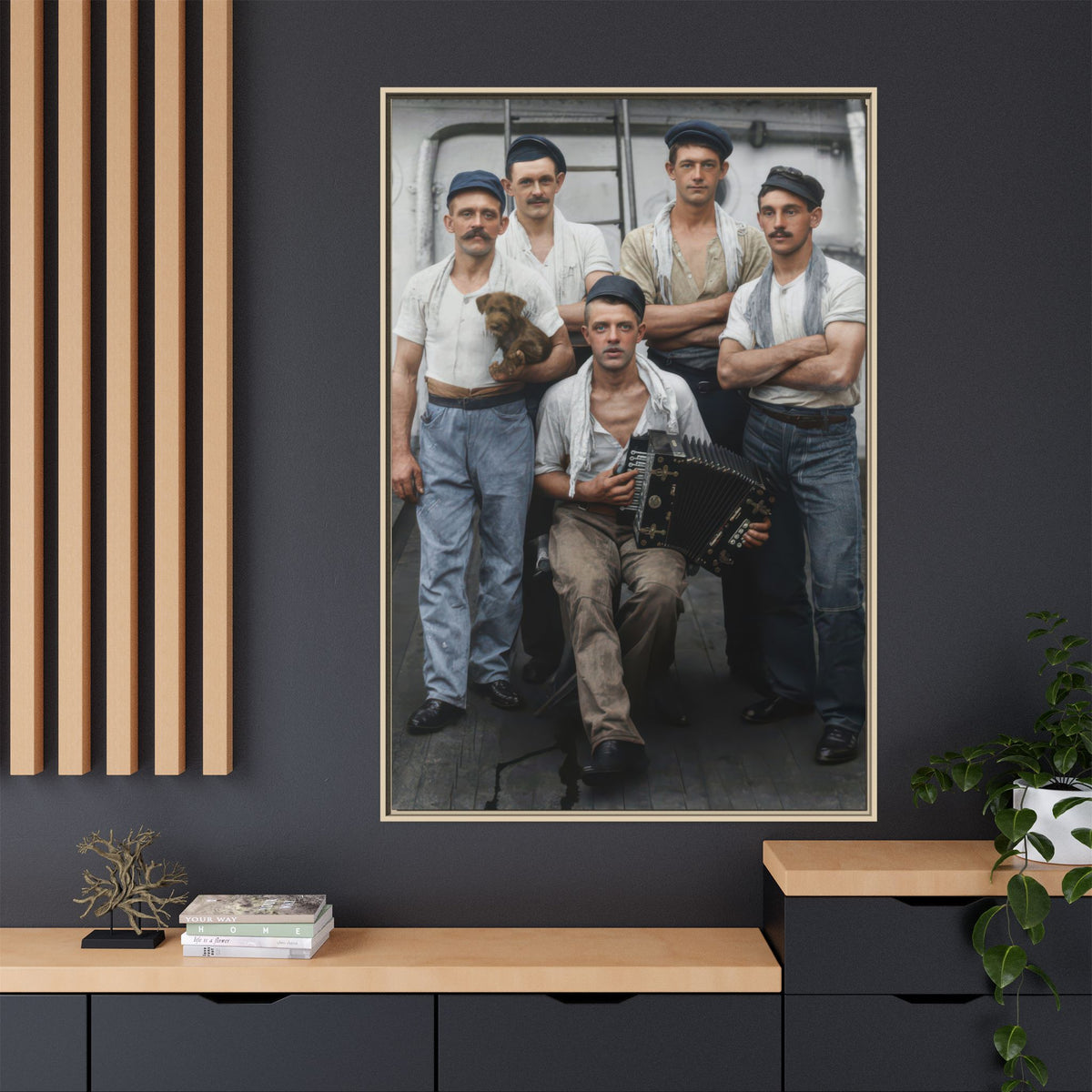
The accordion draws the eye first—its dark bellows unfolding across the seated figure’s lap. Four men stand around him, one holding a small brown dog. Presented as a framed matte canvas, Hommes 002 brings this restored historical photograph into the home with its distinctive balance of human presence, musical detail, and maritime surroundings.
Caps, open-neck shirts, high-waisted trousers, and loosely draped neck cloths give the portrait its historical character. Several men wear mustaches; folded arms and direct gazes lend structure to the arrangement. These details record dress and photographic presentation, while the men’s identities and the date of the gathering remain unknown.
Behind the figures, a ladder rises against the ship’s pale structure. A round porthole, exposed pipes, and wooden deck boards place the group within a setting of strong lines and practical surfaces. The supplied restoration’s muted blues, warm browns, and soft whites hold the composition together, keeping the faces, instrument, and dog as the focus.
In a study or music room, the accordion offers a natural point of connection. Within a maritime-inspired interior, the deck and ship fittings give the image a particular sense of place. Its vertical arrangement also makes it a considered addition to a gallery wall—an image with enough detail to reward a second look.
Part of the Walt & Pete® Hommes | Vintage Portraits of Men Collection, this restored photograph brings men's visual culture into the contemporary home. Across studio portraits, workplaces, and everyday settings, the collection attends to the details that give each image its presence: clothing, held objects, group arrangement, and the character of a setting. Presented within Walt & Pete®’s broader LGBTQ+ archival mission, these photographs invite close looking while respecting the limits of what is known about the people pictured.
Original Photograph Record
Title: Weightlifter Performing an Outdoor Barbell Squat
Date (estimated): Circa 1928–1935
Photographer: Unknown
Place of Production: Unknown
Medium: Gelatin silver photographic print
Dimensions: Small format, 3.5 x 5 in
Why You’ll Love It
- A striking musical focal point: The accordion’s extended bellows anchor the composition.
- An unexpected detail: A small dog held by the left-hand figure adds another point of interest.
- Maritime character: A porthole, ladder, pipes, and wooden deck give the portrait a distinctive setting.
- Historical dress worth studying: Caps, light shirts, neck cloths, and high-waisted trousers reward close viewing.
- Presence within the room: The vertical group portrait offers a considered focal point for a study, music room, or gallery wall.
Product Features
- Museum-quality matte canvas
- Cotton and polyester canvas
- Archival inks
- Pine wood frame
- Frame colors: black, espresso, white
- Multiple size options
Multiple size options
- 8×10
- 11×14
- 16×20
- 24x36
- 32x48
- 40x60
EU representative: HONSON VENTURES LIMITED, gpsr@honsonventures.com, 3, Gnaftis House, Flat 102, Limassol, Mesa Geitonia, 4003, CY
Product information: Generic brand, 2-year warranty in the EU and Northern Ireland as per Directive 1999/44/EC
Care instructions: If the canvas gathers dust, wipe it off gently with a clean, damp cloth.


“Send a Story. Share a Moment.”Vintage Greeting Cards from the Walt & Pete® Archive
-
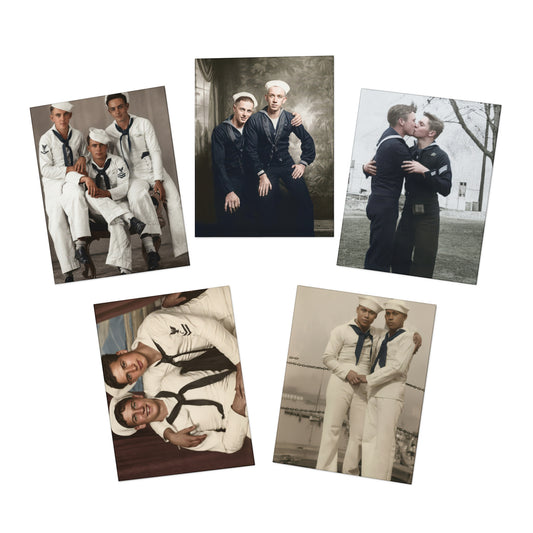
Ephemera of Us Collection – Vintage Naval Portrait Greeting Cards (5-Pack)
Regular price €21,95 EURRegular priceUnit price per -
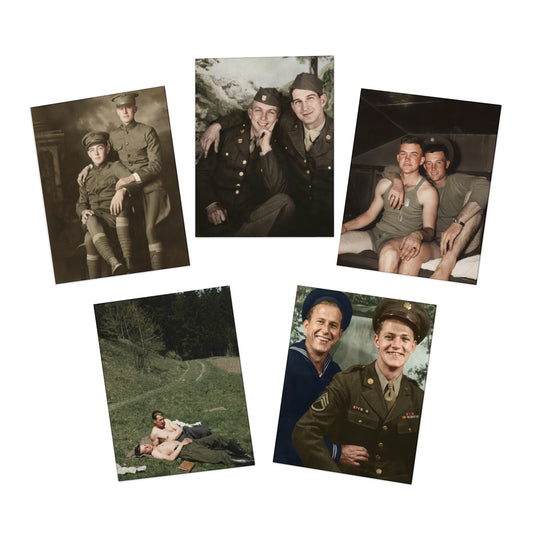
paire Collection – Vintage Military Portrait Greeting Cards (5-Pack) | Ephemera of Us
Regular price €21,95 EURRegular priceUnit price per -
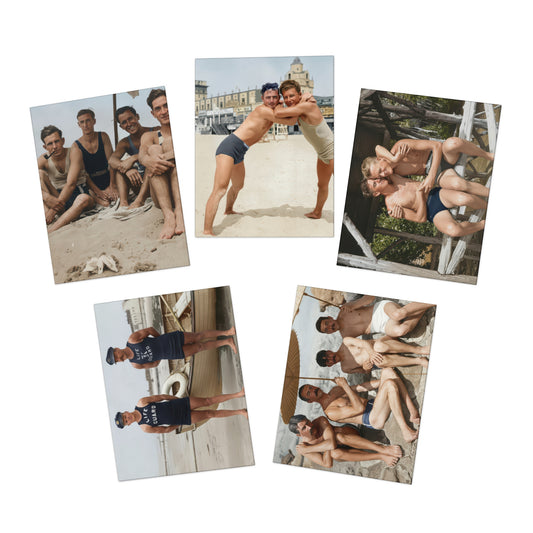
nager Collection – Vintage Swimming Portrait Greeting Cards (5-Pack) | Ephemera of Us | Blank Note Cards
Regular price €21,95 EURRegular priceUnit price per