Original Photograph Record
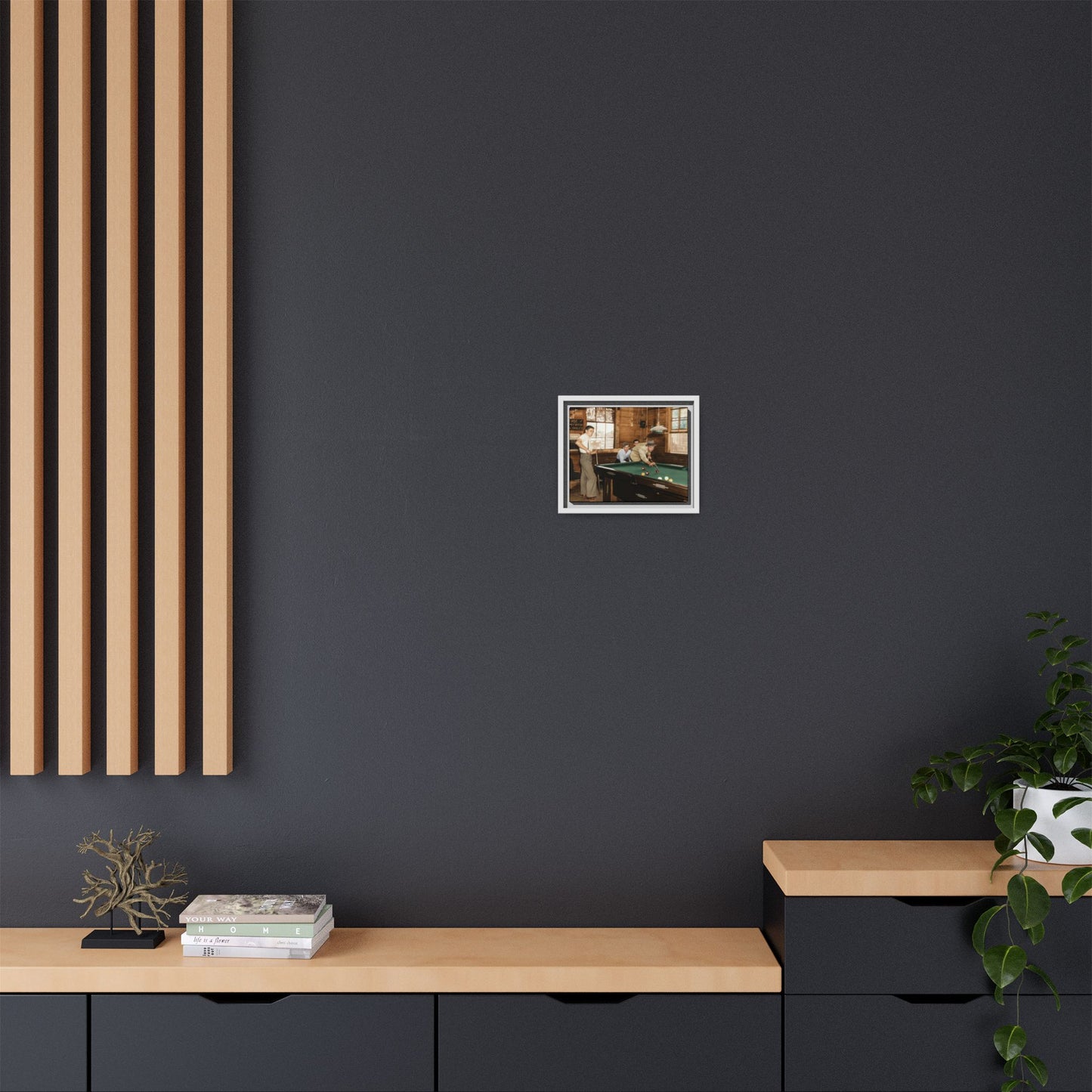
Title: Men Playing Billiards in Wood-Paneled Interior with Posted Signage
Date (estimated): 1935–1945
(Based on high-waisted trousers, wide-brimmed felt hats, patterned neckties, interior industrial-style hanging light fixtures, and commercial signage typography typical of the late 1930s to early 1940s.)
Photographer: Unknown
Place of Production: Unknown
Medium: Chromogenic print (probable)
Dimensions: Small-format snapshot print, 4 x 6 inches
The photograph depicts five male figures gathered around a billiards table inside a wood-paneled interior. One individual leans forward to strike a ball with a cue, while others stand or sit nearby observing. The setting includes multi-pane windows, wall-mounted signage, and overhead hanging light fixtures positioned above the table. A posted sign reads “Please Do Not Sit On Pool Tables.” The clothing consists of suits, collared shirts, ties, and felt hats consistent with mid-twentieth-century casual or leisure attire. The image appears to be an informal interior scene rather than a formal studio portrait.
Original Photo – Condition & Preservation Status
The print exhibits moderate tonal shift and color imbalance consistent with aging chromogenic materials. There is visible contrast compression in darker areas, particularly in the wood-paneled walls and table surface. Minor surface abrasions and small areas of discoloration are present. Edge wear appears minimal in the visible image area. The color instability affects overall tonal accuracy and fine detail in shadowed regions. Proper archival storage in low-light, climate-controlled conditions is recommended, as chromogenic prints are susceptible to continued dye fading. Digitization may assist in preserving visual content while minimizing handling.
Material, Process & Historical Placement
The color palette, contrast characteristics, and overall print appearance suggest a mid-twentieth-century chromogenic (dye coupler) color print, which became increasingly accessible to amateur photographers during the 1930s and 1940s. The informal composition and interior leisure setting align with the broader expansion of personal camera use and vernacular documentation of social activities. Without inscriptions, processing marks, or manufacturer information visible, further attribution is limited. Research is constrained by the absence of documented provenance.
Collector’s Summary
Circa 1935–1945 chromogenic snapshot depicting men playing billiards in an interior leisure setting, showing typical dye shift and moderate tonal compression, representative of mid-century vernacular color photography.
While it is impossible — and historically inappropriate — to determine the sexuality or personal identities of the individuals depicted, photographs of men in shared environments hold significance within queer historical scholarship. Public houses, factory floors, military quarters, rented rooms, and social clubs were spaces where male companionship unfolded visibly and habitually. These were not necessarily spaces defined by sexuality, but they were spaces shaped by proximity, camaraderie, rivalry, dependence, and mutual recognition. The camera occasionally preserved those moments of presence — a shared drink, a gesture of familiarity, a posture of ease — that complicate modern assumptions about emotional restraint and rigid masculinity.
Each image presented here has undergone careful digital preservation using contemporary restoration technologies, including AI-assisted stabilization, tonal repair, and historically guided colorization. All interventions were directed by archival conservation principles and fine-art print standards, ensuring retention of period character, material authenticity, and photographic softness. The aim is not reinterpretation, but legibility — safeguarding fragile records of everyday male life and the layered social worlds in which queer histories quietly resided.