This vintage photograph is part of the Ephemera of Us: Vintage Photo Collection, within the section titled “hommes” — the French word for “men.” This designation centers everyday male life: workspaces, cafés and bars, boarding houses, streets, workshops, and informal interiors. The images gathered here document routine existence — labor, leisure, waiting, conversation — the ordinary rhythms that structured male social worlds in the late nineteenth and early twentieth centuries.
While it is impossible — and historically inappropriate — to determine the sexuality or personal identities of the individuals depicted, photographs of men in shared environments hold significance within queer historical scholarship. Public houses, factory floors, military quarters, rented rooms, and social clubs were spaces where male companionship unfolded visibly and habitually. These were not necessarily spaces defined by sexuality, but they were spaces shaped by proximity, camaraderie, rivalry, dependence, and mutual recognition. The camera occasionally preserved those moments of presence — a shared drink, a gesture of familiarity, a posture of ease — that complicate modern assumptions about emotional restraint and rigid masculinity.
Each image presented here has undergone careful digital preservation using contemporary restoration technologies, including AI-assisted stabilization, tonal repair, and historically guided colorization. All interventions were directed by archival conservation principles and fine-art print standards, ensuring retention of period character, material authenticity, and photographic softness. The aim is not reinterpretation, but legibility — safeguarding fragile records of everyday male life and the layered social worlds in which queer histories quietly resided.
Original Photograph Record
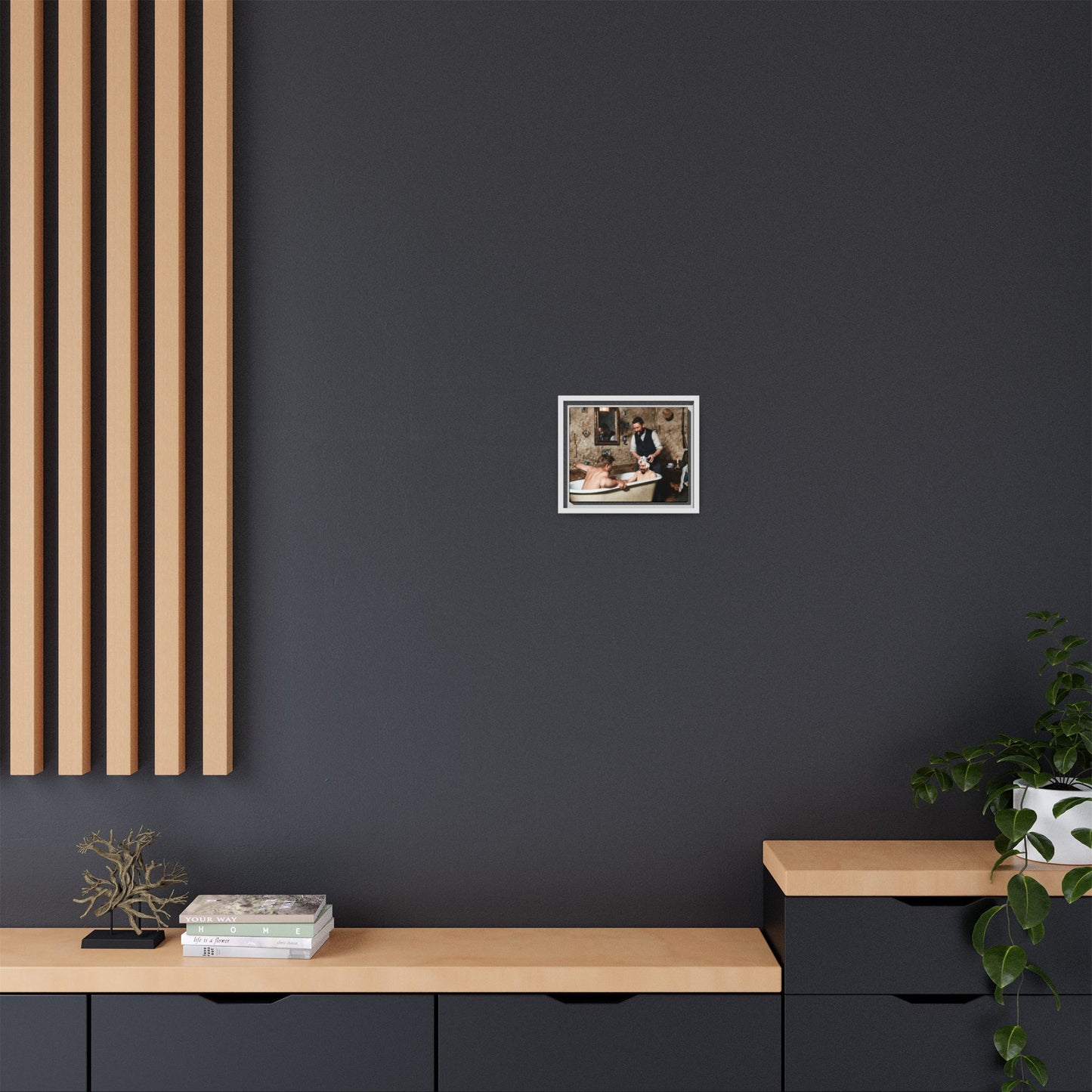
Title: Two Bathers in Tub with Attendant in Interior Setting
Date (estimated): c. 1905–1915
The clothing and interior details support an early twentieth-century date. The standing figure wears a vest over a rolled-sleeve shirt with a high collar typical of the Edwardian period. The presence of a freestanding enamel or porcelain bathtub, decorative wall frames, and a hanging paper lantern-style light fixture further aligns with domestic interiors of the 1900s–1910s. Hairstyles and facial hairstyles are consistent with this period. The sepia-toned quality suggests age-related change rather than the original coloration.
Photographer: Unknown
Place of Production: Unknown
Medium: Gelatin silver print, possibly sepia-toned
Dimensions: Small-format print, 3 x 5 in.
Original Photo – Condition & Preservation Status
The print exhibits pronounced overall warming and tonal shift consistent with oxidation and aging of silver-based photographic paper. There is visible tonal compression in darker wall areas, reducing detail in the background. Highlights, particularly in the bathtub rim and skin areas, show slight flattening but remain legible. Minor surface abrasions and speckling are visible across the image field. Edge wear appears minimal, though faint corner softening is present. These conditions modestly reduce contrast and fine detail. Stabilized storage conditions and high-resolution digitization would help preserve the remaining tonal range and mitigate further degradation.
Material, Process & Historical Placement
The tonal structure, moderate contrast, and likely fiber-based paper suggest a gelatin silver developing-out paper process, widely used from the late nineteenth century onward. The sepia appearance is consistent with common chemical toning practices or natural aging of early prints. The informal interior composition reflects early amateur photography during a period when personal cameras became increasingly accessible. Absence of inscriptions, studio imprints, or mount information limits attribution. Provenance remains unknown.
Collector’s Summary
c. 1905–1915 gelatin silver print depicting two bathers in a freestanding tub with an attendant in an interior setting; moderate tonal warming and surface wear characteristic of early twentieth-century vernacular photography.