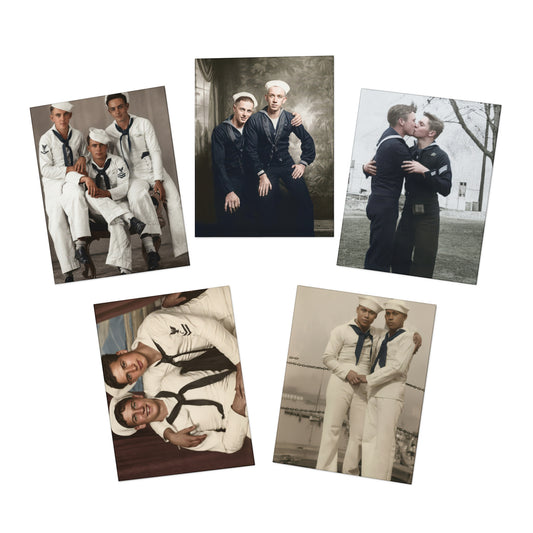
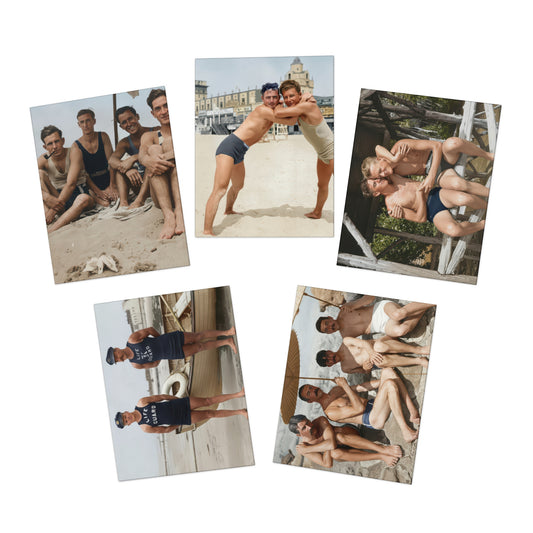
This vintage photograph is part of the Ephemera of Us: Vintage Photo Collection, within the section titled “nager” — the French word for swimming. This designation reflects not only the act itself but also the cultural atmosphere surrounding aquatic life in the late nineteenth and early twentieth centuries. Public beaches, riverbanks, lakes, and seaside resorts became spaces of recreation, leisure, and renewal. Swimming was associated with health, vitality, and modernity, yet it also offered something quieter: immersion, suspension, and a temporary release from the rigid structures of daily life.
Water has long been understood as a space of solace — a place where the body is both supported and unburdened. Early bathing culture required trust in one’s own balance and breath, but it also unfolded in shared environments. Whether standing barefoot on a dock, resting beside a small boat, or posing in wool swimwear along a shoreline, individuals in these photographs occupy liminal spaces between land and water — between stillness and motion. The resulting images capture a sense of openness and vitality shaped by light, air, and proximity.
While it is impossible — and historically inappropriate — to determine the sexuality or personal identities of the individuals depicted, aquatic settings have been recognized by scholars as environments where social codes could briefly loosen. Beaches and swimming areas allowed new forms of bodily visibility and camaraderie. The ease and physical freedom visible in such photographs complicate modern assumptions about reserve and modesty in earlier eras. These images preserve moments of embodied presence shaped by recreation, companionship, and the shared exhilaration of water.
The image presented here has undergone careful digital preservation using contemporary restoration technologies, including AI-assisted stabilization, tonal repair, and historically guided colorization. All interventions were directed by archival conservation principles and fine-art print standards, ensuring the retention of period character, natural tonal modeling, and photographic softness. The goal is not reinterpretation, but legibility — safeguarding a fragile visual record of leisure, vitality, and the fluid social worlds that formed at the water’s edge.
Original Photograph Record
Title: Three Men in Dark Swimwear Before Beach Crowd
Date (estimated): circa 1925–1935. This estimate is based on the men’s sleeveless, close-fitting knit bathing costumes, the short side-parted hairstyles, the small snapshot print format, and the informal beach setting. The penciled inscription “1927” at the top margin may indicate a contemporaneous date, but without corroborating provenance it should be treated as suggestive rather than definitive.
Photographer: Unknown
Place of Production: Unknown
Medium: Gelatin silver print, likely on commercially produced developing-out paper
Dimensions: Small-format snapshot print; 2.5 x 3.5 in.
Original Photo – Condition & Preservation Status
The print shows moderate age-related wear consistent with vernacular snapshot photography. The paper has an overall warm tone, suggesting mild yellowing or age-related discoloration. Corner wear is visible, especially at the upper right and lower right, where the print edges show small creases or losses. There is slight tonal compression in the sky highlights and in some facial areas, while darker areas of the bathing costumes retain limited but adequate detail. Minor surface wear and softening are also apparent, though no severe scratches, tears, or pronounced staining are clearly visible in the reproduced image.
These conditions do not substantially impair legibility. The principal figures, background crowd, and beach rail remain readable, but edge damage and mild tonal flattening reduce the print’s crispness and may limit close study of finer details. Conservation housing and careful digitization would help preserve the object and reduce handling of a print that already shows corner vulnerability.
Material, Process & Historical Placement
The photograph is most consistent with a gelatin silver print, as evidenced by its black-and-white tonal range, moderate contrast, and standardized machine-made snapshot format. The subject matter and informal composition align with the widespread use of portable amateur cameras in the interwar period, when leisure scenes and beach photography became common vernacular subjects. The penciled number at the top suggests private ownership or filing, but without accompanying inscriptions, stamps, or album context, the photographer, place, and exact circumstances of production remain unknown. Research is limited by the absence of provenance and by the lack of the reverse side or original housing.
Nager 044 is a vintage photograph reproduction presented as framed canvas wall art, based on a historical image showing three men in dark one-piece swimwear posed before a crowded beach setting. Reproduced as a museum-quality matte canvas, this piece preserves the documentary clarity and visual charm of the original snapshot while offering a refined presentation for contemporary interiors.
Estimated to date from circa 1925 to 1935, the image reflects the visual culture of interwar leisure photography. The scene is rooted in vernacular seaside image-making, with period bathing dress, informal posing, and a public recreational setting characteristic of personal snapshots from the early 20th century.
Visually, the composition balances three standing figures against a layered beach background filled with rails, bathers, and open sky. The dark swimwear creates a strong tonal anchor, while the raised viewpoint and active crowd below add depth and movement to the scene. The restored presentation retains period softness and a quiet historical atmosphere while making the original image more legible for modern display.
As home décor, this framed matte canvas works especially well in studies, hallways, guest rooms, beach homes, libraries, and gallery walls. It offers a thoughtful way to bring historical photography, seaside visual culture, and archival masculine portraiture into a space with understated character.
Why You’ll Love It
- Strong three-figure beach composition with rich interwar character
- A compelling example of historical recreational photography
- Adds an archival, coastal, and masculine presence to a room
- Restored for display while preserving period softness and atmosphere
- A thoughtful piece for collectors of vintage portraiture and seaside imagery
Product Features
- Museum-quality matte canvas
- Cotton and polyester canvas
- Archival inks
- Pine wood frame
- Frame colors: black, espresso, white
Multiple size options
- 8×10
- 11×14
- 16×20
________________________________________
Optional Giclée Prints Available upon request. For inquiries, please contact: info at waltandpete dot com