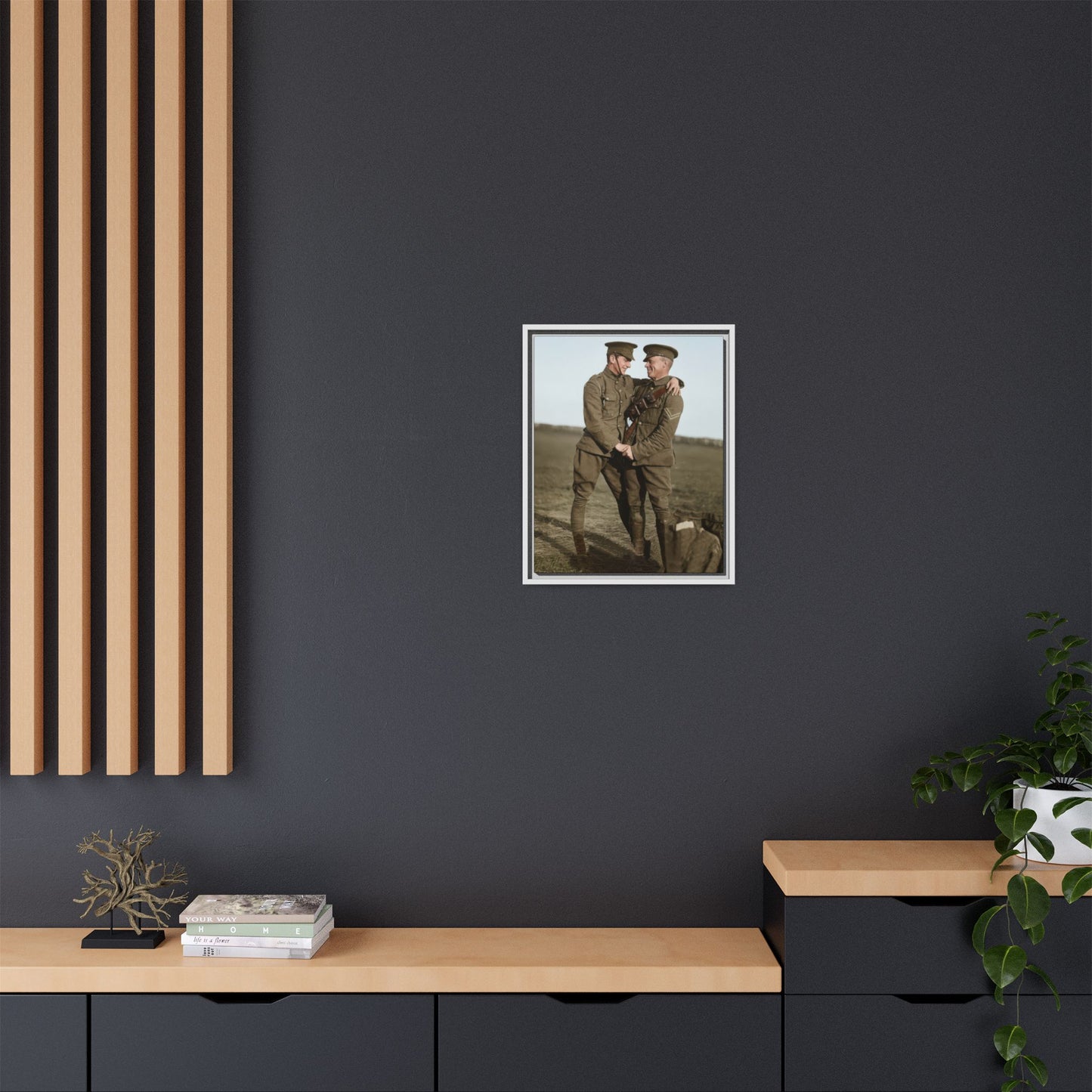
This vintage photograph is part of the Ephemera of Us: Vintage Photo Collection, within the section titled “paire” — the French word for “pair.” The designation reflects the presence of two men pictured together in a moment of visible closeness. While it is impossible — and historically inappropriate — to determine the sexuality or personal identities of the individuals depicted, the composition conveys a quiet intimacy through gesture, proximity, and shared gaze. Such images have often been described by scholars as representations of “affectionate men,” a visual category that acknowledges documented forms of male tenderness and companionship in earlier eras. Whether understood as friendship, kinship, or something more personal, the photograph preserves a moment of male relational closeness that challenges modern assumptions about emotional expression between men.
The image presented here has undergone careful digital preservation using contemporary restoration technologies, including AI-assisted stabilization, tonal repair, and historical colorization. All interventions were guided by archival photo conservation principles and fine-art print standards, with the aim of maintaining period character, photographic softness, and material authenticity while improving legibility for modern viewers. It stands as a testament both to the layered ways intimacy was lived and recorded in the past and to evolving methods used to safeguard fragile visual history in the present.
Original Photograph Record
Title: Two Uniformed Soldiers Standing Together in an Open Landscape
Date (estimated): c. 1914–1918
Photographer: Unknown
Place of Production: Unknown
Medium: Gelatin silver photograph (probable)
Dimensions: Unknown; small-format print
Original Photo – Condition & Preservation Status
The photograph presents characteristics typical of early twentieth-century prints intended for personal circulation. Overall tonal definition remains strong, with clear separation between uniform fabrics and the lighter sky. Minor tonal compression is visible in shadowed areas, particularly in the lower garments and boots. The print shows a slight overall warming consistent with the aging of the paper base. Small specks and faint surface irregularities are present, most noticeable within the open background. Edge wear cannot be fully assessed from the reproduced view, and no unambiguous silver mirroring is visible.
These gradual changes soften micro-contrast and may obscure fine detail in insignia, textile weave, and facial modeling. Conservation or digital restoration would primarily improve legibility while preserving the evidentiary character of the original artifact.
Material, Process & Historical Placement
The grayscale palette, moderate contrast, and absence of the brown tonalities associated with albumen printing indicate a gelatin silver developing-out process. This medium dominated amateur and military photography during the years surrounding the First World War. The outdoor setting, direct natural light, and relatively spontaneous stance correspond with the expanding use of portable cameras that allowed photographs to be made beyond formal studio environments.
No photographer’s mark, studio imprint, or inscription is visible, limiting attribution of maker, sitters, and precise location. The image can therefore be situated within broader practices of wartime personal documentation, when service members frequently created small prints for exchange and remembrance. Interpretation is necessarily confined to material and visual evidence due to the absence of supporting provenance.
Collector’s Summary
A probable gelatin silver photograph from about 1914–1918 depicting two uniformed soldiers standing in an open landscape. Mild tonal aging and light surface marks are present, and the print exemplifies informal military portraiture produced during the era of widespread portable camera use.