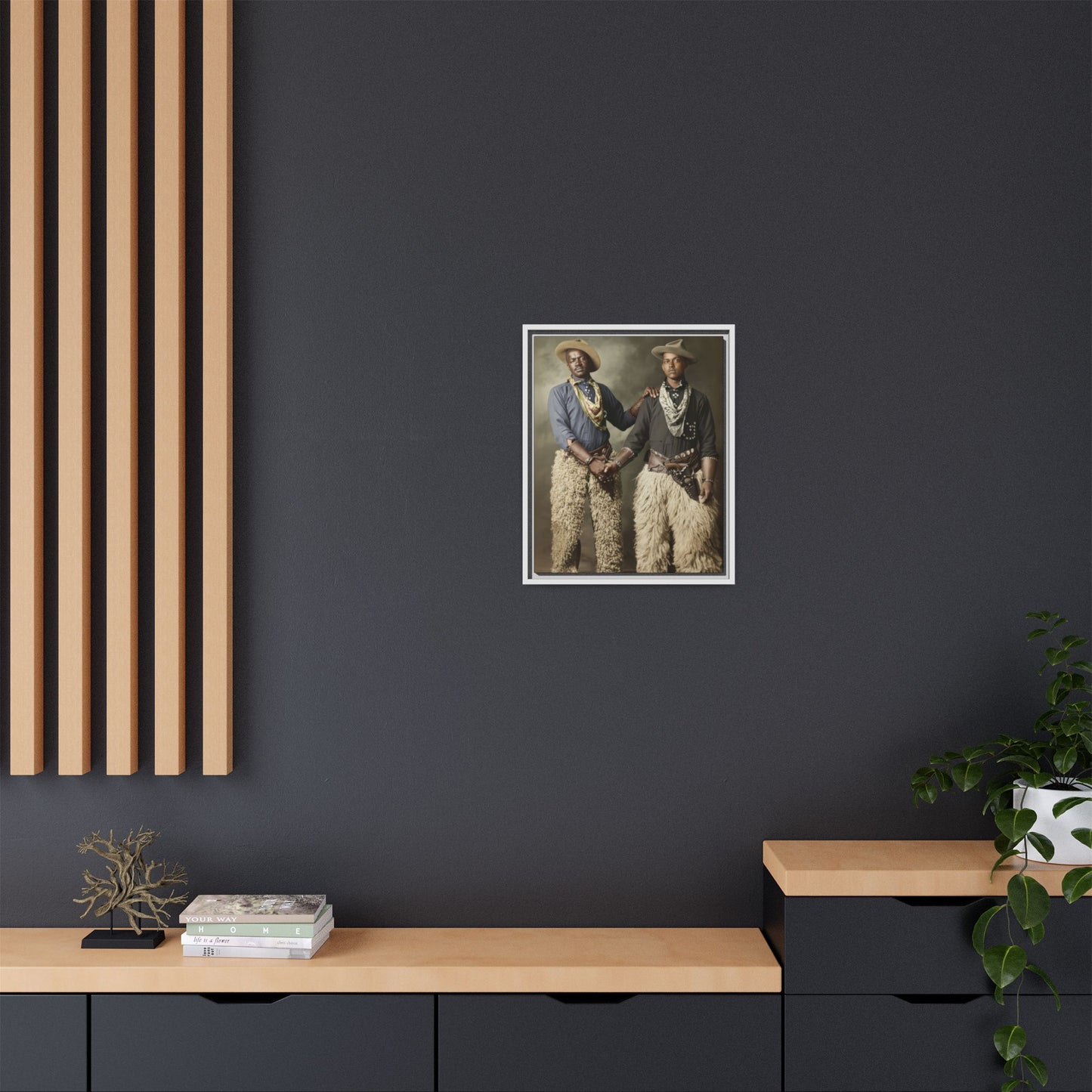
This vintage photograph is part of the Ephemera of Us: Vintage Photo Collection, within the section titled “paire” — the French word for “pair.” The designation reflects the presence of two men pictured together in a moment of visible closeness. While it is impossible — and historically inappropriate — to determine the sexuality or personal identities of the individuals depicted, the composition conveys a quiet intimacy through gesture, proximity, and shared gaze. Such images have often been described by scholars as representations of “affectionate men,” a visual category that acknowledges documented forms of male tenderness and companionship in earlier eras. Whether understood as friendship, kinship, or something more personal, the photograph preserves a moment of male relational closeness that challenges modern assumptions about emotional expression between men.
The image presented here has undergone careful digital preservation using contemporary restoration technologies, including AI-assisted stabilization, tonal repair, and historical colorization. All interventions were guided by archival photo conservation principles and fine-art print standards, with the aim of maintaining period character, photographic softness, and material authenticity while improving legibility for modern viewers. It stands as a testament both to the layered ways intimacy was lived and recorded in the past and to evolving methods used to safeguard fragile visual history in the present.
Original Photograph Record
Title: Two Men in Western Costume with Fringed Chaps
Date (estimated): c. 1895–1905
Photographer: Unknown
Place of Production: Unknown
Medium: Gelatin silver print (probable)
Dimensions: Unknown; postcard or small cabinet format
Original Photo – Condition & Preservation Status
The print shows overall yellowing and warming of the paper base consistent with age. Creasing is visible along the lower and right margins, with additional bending at the corners. Several linear abrasions traverse the image field, most noticeable in the lower half. Minor emulsion wear and small areas of surface loss appear along the edges. Tonal compression is present in darker garments, where detail merges in shadow, while highlights on the hats and lighter textiles remain legible. No silver mirroring is clearly discernible at this resolution.
These conditions slightly reduce fine detail in textures such as leather, wool, and decorative elements. Nevertheless, the primary forms remain clear. Conservation stabilization and careful digitization would assist legibility while preventing further mechanical stress to the support.
Material, Process & Historical Placement
The smooth tonal gradation, matte surface appearance, and paper support suggest a gelatin silver developing-out print, the dominant commercial format for vernacular portraiture by the turn of the twentieth century. The studio backdrop and upright posing align with standardized photographic practices of the period, in which sitters often appeared in occupational, theatrical, or regionally coded attire.
Clothing details—including wide-brimmed hats, cartridge belts, and heavily textured chaps—support a date around the end of the nineteenth or very early twentieth century. Without studio imprints, inscriptions, or accompanying documentation, the photographer and place of production remain Unknown. Interpretation is therefore limited to material evidence and widely recognized dress history rather than individual identification.
Collector’s Summary
A probable gelatin silver print from approximately 1895–1905 depicting two men posed in Western costume before a studio backdrop. Despite creases, abrasions, and moderate tonal compression, the photograph remains a representative example of popular portrait practices of its era.