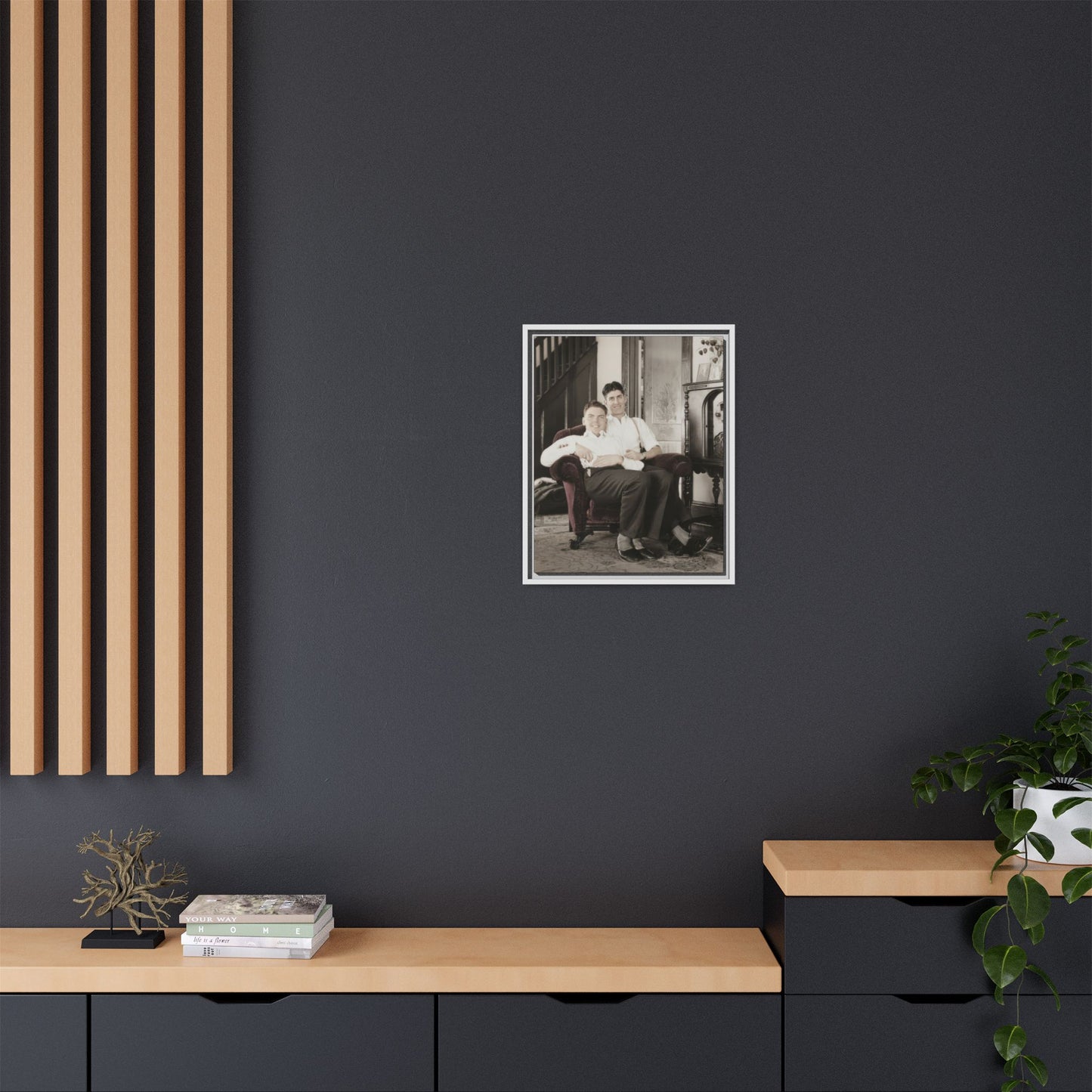
This vintage photograph is part of the Ephemera of Us: Vintage Photo Collection, within the section titled “paire” — the French word for “pair.” The designation reflects the presence of two men pictured together in a moment of visible closeness. While it is impossible — and historically inappropriate — to determine the sexuality or personal identities of the individuals depicted, the composition conveys a quiet intimacy through gesture, proximity, and shared gaze. Such images have often been described by scholars as representations of “affectionate men,” a visual category that acknowledges documented forms of male tenderness and companionship in earlier eras. Whether understood as friendship, kinship, or something more personal, the photograph preserves a moment of male relational closeness that challenges modern assumptions about emotional expression between men.
The image presented here has undergone careful digital preservation using contemporary restoration technologies, including AI-assisted stabilization, tonal repair, and historical colorization. All interventions were guided by archival photo conservation principles and fine-art print standards, with the aim of maintaining period character, photographic softness, and material authenticity while improving legibility for modern viewers. It stands as a testament to both the layered ways intimacy was lived and recorded in the past and to the evolving methods used to safeguard fragile visual history in the present.
Original Photograph Record
Title: Two Young Men Seated in Armchair beside Radio Console
Date (estimated): c. 1935–1945
Photographer: Unknown
Place of Production: Unknown
Medium: Gelatin silver print (probable)
Dimensions: Small-format snapshot print; exact size Unknown
Original Photo – Condition & Preservation Status
The photograph presents characteristics consistent with a mid-twentieth-century vernacular print. The paper shows mild overall yellowing, particularly visible in the border and lighter wall areas. Contrast is generally stable, though highlights on shirts and faces exhibit slight compression, softening fine detail.
Minor surface abrasions and small particulate marks are visible upon close inspection. No major tears or corner losses are evident. The darker tonal regions—such as the upholstery, staircase, and radio cabinet—retain adequate depth, though some subtle merging of shadow values is present.
These condition traits modestly affect legibility but do not obscure primary subject matter. Preventive conservation measures, including archival housing and reduced light exposure, would slow further deterioration. Use of a reference surrogate would minimize handling of the original object.
Material, Process & Historical Placement
The matte surface, grayscale tonal structure, and standardized consumer size suggest a gelatin silver developing-out paper print. This process dominated amateur and commercial photography from the 1920s through the 1940s, supported by widely available roll-film cameras and drugstore or mail-order processing.
Material culture evidence assists in dating. The floor-model radio with a decorative grille and a vertical cabinet form corresponds to designs popular in the late 1930s and early 1940s. Clothing—high-waisted trousers, leather shoes, and open-collar shirts—supports this timeframe.
No studio imprint or manufacturer’s marking is visible, and the absence of inscriptions prevents attribution of photographer or location. Provenance remains Unknown.
Collector’s Summary
A probable gelatin silver snapshot dating to about 1935–1945, depicting two young men seated indoors beside a domestic radio. With light age wear and stable tones, it is a representative example of interwar to wartime amateur interior portraiture.