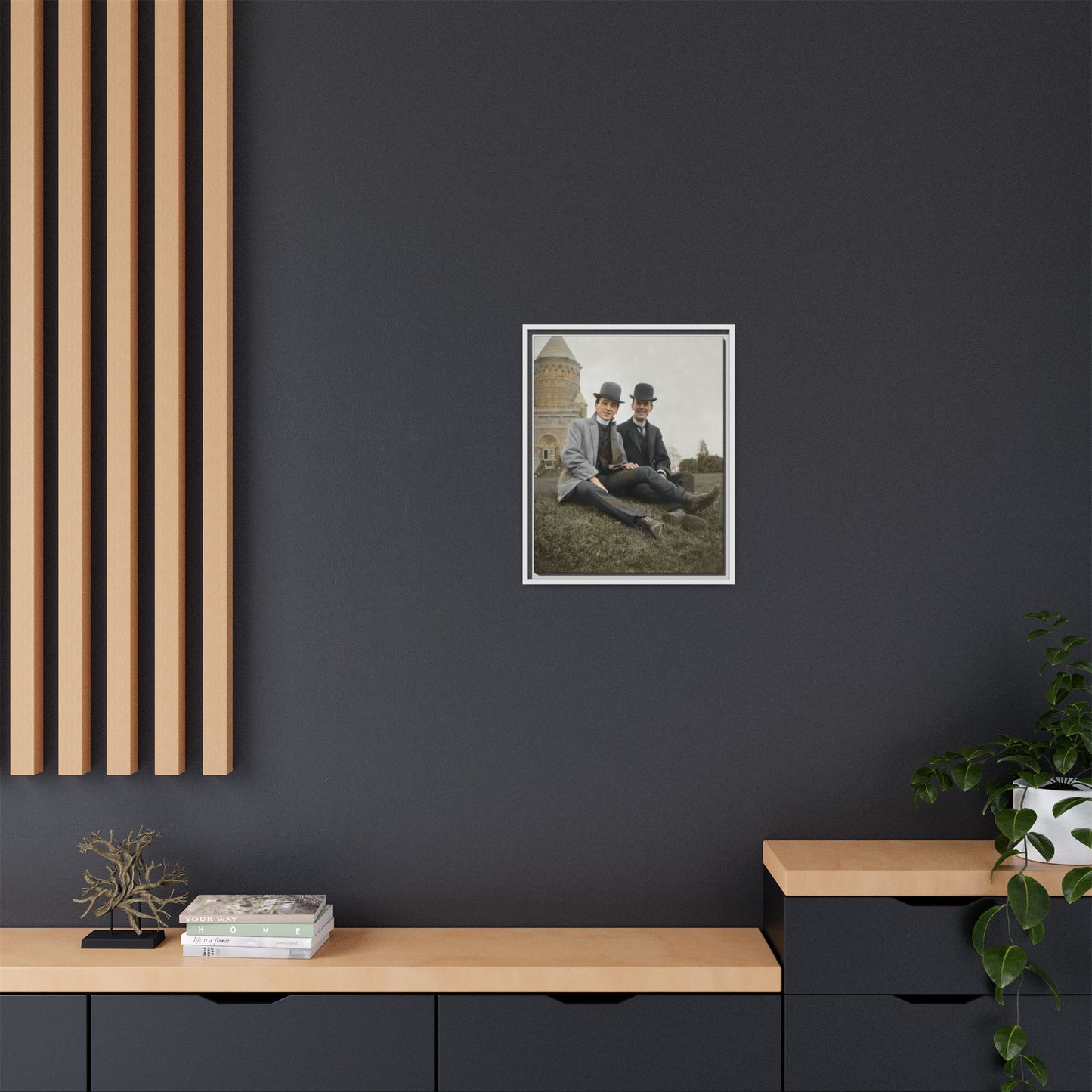
This vintage photograph is part of the Ephemera of Us: Vintage Photo Collection, within the section titled “paire” — the French word for “pair.” The designation reflects the presence of two men pictured together in a moment of visible closeness. While it is impossible — and historically inappropriate — to determine the sexuality or personal identities of the individuals depicted, the composition conveys a quiet intimacy through gesture, proximity, and shared gaze. Such images have often been described by scholars as representations of “affectionate men,” a visual category that acknowledges documented forms of male tenderness and companionship in earlier eras. Whether understood as friendship, kinship, or something more personal, the photograph preserves a moment of male relational closeness that challenges modern assumptions about emotional expression between men.
The image presented here has undergone careful digital preservation using contemporary restoration technologies, including AI-assisted stabilization, tonal repair, and historical colorization. All interventions were guided by archival photo conservation principles and fine-art print standards, with the aim of maintaining period character, photographic softness, and material authenticity while improving legibility for modern viewers. It stands as a testament to both the layered ways intimacy was lived and recorded in the past and to the evolving methods used to safeguard fragile visual history in the present.
Original Photograph Record
Title: Two Men Seated on Lawn Before the James A. Garfield Memorial
Date (estimated): 1905–1915
Photographer: Unknown
Place of Production: Cleveland, Ohio, United States
Medium: Gelatin silver print, warm-toned
Dimensions: Small-format snapshot print; 2.5 x 3.5 in.
Original Photo – Condition & Preservation Status
The print shows an overall warm cast consistent with the aging of early silver gelatin papers. Contrast remains serviceable, though highlight detail in the sky is reduced, likely due to exposure limitations combined with gradual tonal compression over time.
Light abrasions and small particulate marks are visible across the image surface. Edge definition appears slightly softened; corner integrity cannot be fully assessed from the available view. No pronounced creases or losses are evident. The presence of silver mirroring cannot be confirmed.
This vintage photograph framed canvas wall art features a historical portrait of two men seated outdoors before a monumental architectural structure, produced from an original vintage photograph. With its refined clothing, balanced composition, and memorable setting, Paire 070 offers a compelling example of vintage portraiture for collectors of archival imagery, historical photography, and museum-style wall décor.
In the early 20th century, portrait photography frequently extended beyond the formal studio into outdoor and location-based settings, where architecture, landscape, and attire could work together to shape the final image. Such photographs often retained the compositional control of studio practice while incorporating a more relaxed spatial setting. This image reflects broader traditions in social portraiture, where dress, pose, and environment contributed to a visually deliberate and enduring record of presence without requiring speculation about the sitters’ identities or relationship.
Visually, the photograph is defined by its strong contrast between the two dark hats and tailored coats, the soft grass foreground, and the large round stone building rising behind the sitters. Their seated posture creates a grounded and informal arrangement, while their formal clothing, polished shoes, and layered garments preserve a clear period character. The image balances architectural scale with human closeness, producing a composition that feels both expansive and intimate. Tonally, the photograph carries a muted, atmospheric softness that supports its archival quality and historical appeal.
This piece displays beautifully in living rooms, studies, offices, libraries, and gallery walls, especially in interiors that value architectural imagery, portraiture, and thoughtfully curated historical décor. Its combination of outdoor setting, period fashion, and composed visual rhythm gives it strong decorative versatility. Whether placed as a focal work or included among other archival photographs, it brings a reflective and historically grounded presence to the home.
Why You’ll Love It
- Elegant early 20th-century portrait with architectural setting
- Museum-style restoration that preserves atmosphere and period softness
- Distinctive wall art for collectors of archival and historical photography
- Beautiful balance of formal dress, outdoor setting, and visual intimacy
- A memorable addition to a curated collection of vintage portraiture
Product Features
- Museum-quality matte canvas
- Cotton and polyester canvas
- Archival inks
- Pine wood frame
- Frame colors: black, espresso, white
Multiple size options
- 8×10
- 11×14
- 16×20
________________________________________
Optional Giclée Prints Available upon request. For inquiries, please contact: info at waltandpete dot com
These issues modestly affect fine detail, particularly in distant architectural carving and fabric texture, but do not impair comprehension of subject, attire, or location. Standard preservation measures—controlled storage, minimal handling, and reliance on digital surrogates for access—would adequately protect the object.
Material, Process & Historical Placement
The matte surface, grayscale range, and scale are characteristic of gelatin silver developing-out papers common in early-twentieth-century amateur photography. The informal outdoor composition and portable format correspond with the widespread adoption of handheld cameras during this period.
Clothing elements—including bowler hats, structured collars, tailored jackets, and narrow ties—support a date within the first decades of the century. The identifiable architecture of the Garfield Memorial, completed in the late nineteenth century and a frequent excursion site, provides geographic context while not narrowing the date beyond stylistic evidence.
Research interpretation remains limited by the absence of inscriptions, photographer attribution, or accompanying documentation.