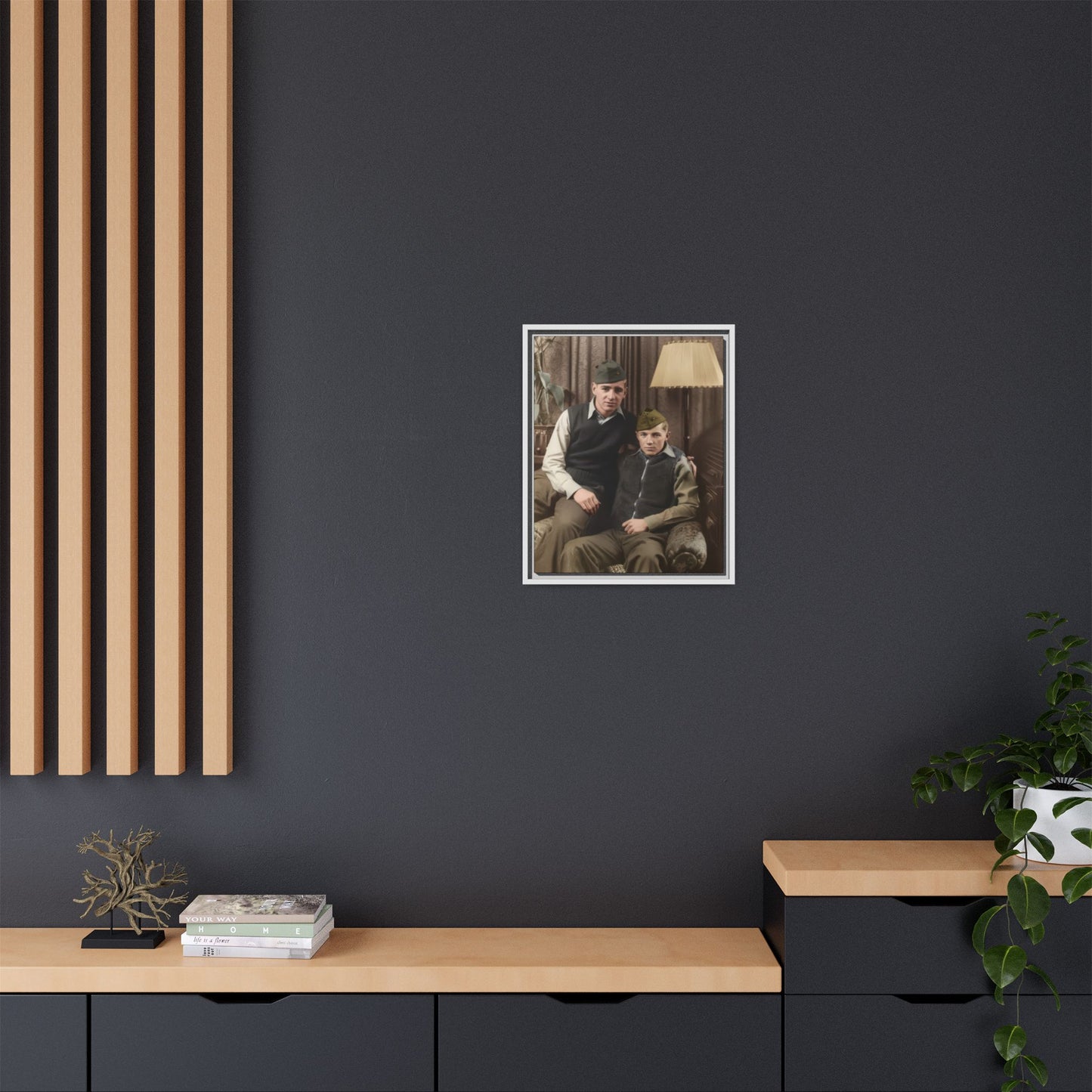
This vintage photograph is part of the Ephemera of Us: Vintage Photo Collection, within the section titled “paire” — the French word for “pair.” The designation reflects the presence of two men pictured together in a moment of visible closeness. While it is impossible — and historically inappropriate — to determine the sexuality or personal identities of the individuals depicted, the composition conveys a quiet intimacy through gesture, proximity, and shared gaze. Such images have often been described by scholars as representations of “affectionate men,” a visual category that acknowledges documented forms of male tenderness and companionship in earlier eras. Whether understood as friendship, kinship, or something more personal, the photograph preserves a moment of male relational closeness that challenges modern assumptions about emotional expression between men.
The image presented here has undergone careful digital preservation using contemporary restoration technologies, including AI-assisted stabilization, tonal repair, and historical colorization. All interventions were guided by archival photo conservation principles and fine-art print standards, with the aim of maintaining period character, photographic softness, and material authenticity while improving legibility for modern viewers. It stands as a testament to both the layered ways intimacy was lived and recorded in the past and to the evolving methods used to safeguard fragile visual history in the present.
Original Photograph Record
Title: Two Uniformed Men Seated in Domestic Interior
Date (estimated): circa 1942–1948
Photographer: Unknown
Place of Production: Unknown
Medium: Gelatin silver print
Dimensions: Small-format print, approximately 3.25 x 4.5 inches (snapshot format estimate)
Original Photo – Condition & Preservation Status
The print exhibits moderate tonal compression consistent with mid-20th-century gelatin silver materials. Overall contrast remains stable, though highlight areas appear slightly softened, and shadow detail is somewhat reduced. The paper base shows uniform warming consistent with natural aging. Minor edge wear is visible along the borders, particularly at corners, suggesting handling over time. Surface inspection indicates light abrasions typical of vernacular prints stored without protective enclosures.
The lower right quadrant contains visible handwritten ink markings on the image surface. The ink appears stable but may pose long-term chemical interaction risks depending on composition. No pronounced silver mirroring is evident at this scale, though a slight reflective shift may be present in darker tonal regions.
These condition factors modestly affect fine detail legibility but do not significantly compromise subject visibility. Preventive conservation measures, including stable environmental storage and protective housing, are recommended to slow further tonal change and paper degradation.
Material, Process & Historical Placement
The photograph is most consistent with a machine-processed gelatin silver print, the dominant black-and-white process in the United States and Europe during the 1930s–1950s. The paper thickness, border style, and tonal structure align with mid-20th-century consumer snapshot production.
Clothing evidence supports a date range within the 1940s. Both sitters wear military-style garrison caps and uniform garments consistent with World War II–era service attire. The domestic interior setting—including a fabric-shaded floor lamp, drapery backdrop, upholstered armchair, and a tabletop radio receiver—reflects furnishings common in the 1940s.
The image is a typical example of wartime or immediate postwar personal portraiture, produced with readily available amateur photographic equipment. Due to the absence of imprint, stamp, or accompanying documentation, provenance and precise geographic origin remain unknown.
Collector’s Summary
Circa 1942–1948 gelatin silver snapshot depicting two uniformed men seated in a domestic interior; condition consistent with mid-century vernacular prints, with moderate tonal aging and minor edge wear. The photograph exemplifies mid-20th-century amateur military portraiture within a private residential setting.