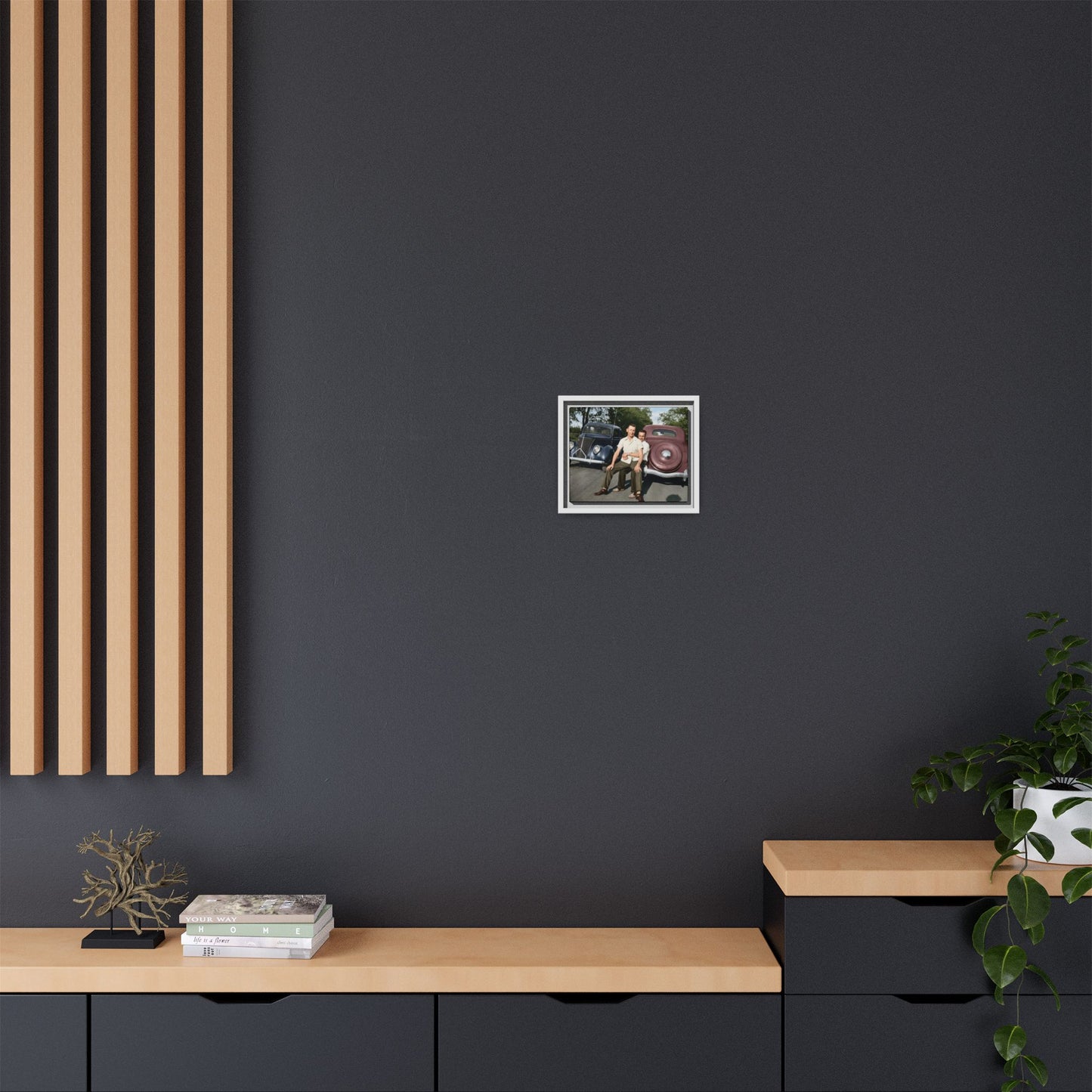
This vintage photograph is part of the Ephemera of Us: Vintage Photo Collection, within the section titled “paire” — the French word for “pair.” The designation reflects the presence of two men pictured together in a moment of visible closeness. While it is impossible — and historically inappropriate — to determine the sexuality or personal identities of the individuals depicted, the composition conveys a quiet intimacy through gesture, proximity, and shared gaze. Such images have often been described by scholars as representations of “affectionate men,” a visual category that acknowledges documented forms of male tenderness and companionship in earlier eras. Whether understood as friendship, kinship, or something more personal, the photograph preserves a moment of male relational closeness that challenges modern assumptions about emotional expression between men.
The image presented here has undergone careful digital preservation using contemporary restoration technologies, including AI-assisted stabilization, tonal repair, and historical colorization. All interventions were guided by archival photo conservation principles and fine-art print standards, with the aim of maintaining period character, photographic softness, and material authenticity while improving legibility for modern viewers. It stands as a testament to both the layered ways intimacy was lived and recorded in the past and to the evolving methods used to safeguard fragile visual history in the present.
Original Photograph Record
Title: Two Men Seated on Automobile Bumper with Second Vehicle in Background
Date (estimated): c. 1935–1945
Photographer: Unknown
Place of Production: Unknown
Medium: Gelatin silver print
Dimensions: Small-format snapshot print, 2.5 × 3.5 in.
Original Photo – Condition & Preservation Status
The photograph appears consistent with a mid-20th-century vernacular snapshot, exhibiting moderate tonal compression with slightly flattened highlights and reduced shadow detail. There is visible softening of fine detail, particularly in the background foliage and vehicle surfaces, likely due to generational loss or print aging. Minor surface wear is present, including light abrasions and faint marks typical of handling. Edge definition appears intact, though slight rounding or softening at the corners may be present.
The overall legibility of the image remains strong, with principal subjects and major objects clearly distinguishable. However, tonal aging and surface wear may obscure finer details, such as textures in clothing or vehicle finishes. Conservation or high-resolution digitization may improve interpretive clarity and stabilize the image for long-term study.
Material, Process & Historical Placement
The image is most consistent with a gelatin silver print, the dominant photographic process for amateur and commercial photography from the 1920s through the 1950s. The tonal range, matte-to-semi-gloss surface appearance, and small standardized format suggest production from a consumer camera using roll film, likely developed through commercial processing services.
The presence of two automobiles, including one with a rear-mounted spare tire and another with a vertical grille, provides a chronological anchor consistent with late 1930s to early 1940s automotive design. Clothing styles—short-sleeved shirts, cuffed trousers, and casual footwear—further support this timeframe.
This photograph reflects broader trends in the democratization of photography during the early 20th century, when portable cameras enabled informal documentation of everyday life, leisure, and mobility. The lack of identifying marks or inscriptions limits precise attribution, and the absence of provenance constrains further contextualization beyond material and stylistic analysis.
- Strong composition framed by two period automobiles
- Clear representation of mid-century roadside photography
- Balanced visual structure with central human subjects
- Ideal for gallery walls and historical decor themes
- Archival photograph with transportation and lifestyle context
- Museum-quality matte canvas
- Cotton and polyester canvas
- Archival inks
- Pine wood frame
- Frame colors: black, espresso, white
- 8×10
- 11×14
- 16×20