Alan Turing The Computing Machine Woven Wall Tapestry
Couldn't load pickup availability
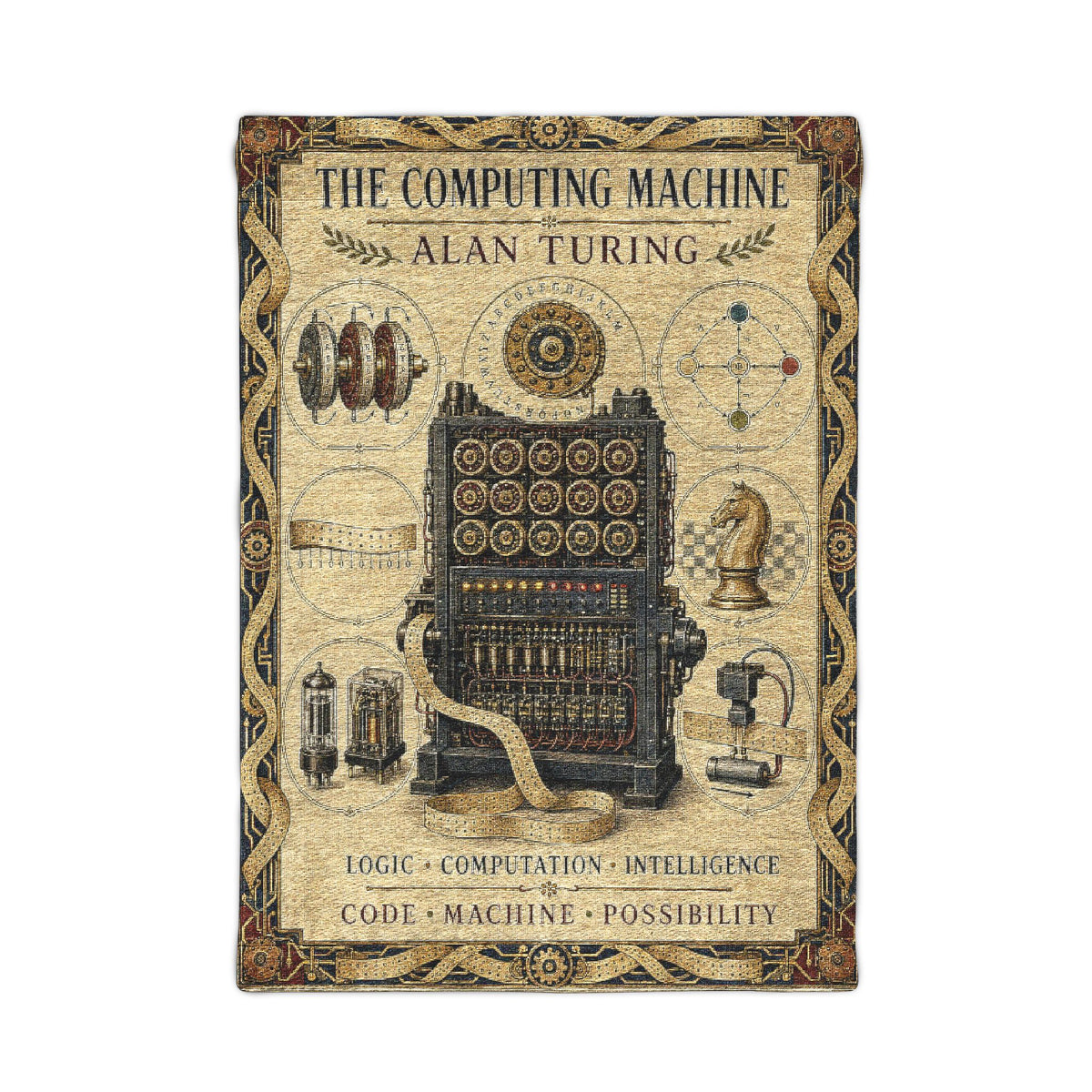
The Computing Machine: Alan Turing
Honor the extraordinary legacy of Alan Turing through a richly detailed woven wall tapestry inspired by the mechanical language of early computing, mathematical logic and wartime codebreaking.
At the center of the composition stands an imagined electromechanical computing machine with circular rotors, relays, switches, wiring and illuminated controls. Punched tape winds through the machinery and ornamental border, visually connecting the processes of instruction, information and computation.
Six surrounding technical studies reference cipher rotors, binary sequences, logical states, vacuum tubes, relays, machine-readable tape and computer chess. Rendered in parchment cream, deep navy, antique brass, copper, burgundy and charcoal, the artwork evokes a mid-twentieth-century technical plate preserved within an Arts and Crafts–inspired border.
The inscriptions summarize Turing’s enduring legacy:
Logic • Computation • Intelligence
Code • Machine • Possibility
The Idea of a Universal Machine
In his influential 1936 paper on computable numbers, Turing described a theoretical machine capable of reading symbols from a tape, following defined instructions and performing any calculation that could be expressed algorithmically.
Now known as the universal Turing machine, the concept helped establish the theoretical foundation for general-purpose programmable computers. Instead of constructing a different physical machine for every problem, one machine could perform many different tasks by changing its instructions.
This principle remains fundamental to modern computing.
Codebreaking at Bletchley Park
During the Second World War, Turing worked at Bletchley Park as part of the larger British codebreaking operation.
He developed important concepts behind the British Bombe—an electromechanical machine used to help determine the daily settings of German Enigma machines. The Bombe drew upon earlier Polish cryptanalytic achievements and was developed through the work of Turing, Gordon Welchman, engineers and numerous codebreakers and operators.
Bletchley Park identifies Turing’s work on the Bombe as one of his best-known wartime achievements. Bletchley Park
From Codebreaking to Electronic Computing
After the war, Turing joined Britain’s National Physical Laboratory and developed plans for the Automatic Computing Engine, or ACE.
The Pilot ACE, based upon his designs, first operated in 1950. Its architecture demonstrated how a stored-program electronic computer could perform different tasks through programming instead of requiring additional machinery for each function. Computer History Museum
The tapestry’s central machine is not a literal representation of the Bombe, Enigma or Pilot ACE. Instead, it combines recognizable elements of early electromechanical and electronic computing into an original visual tribute.
Machine Intelligence and Computer Chess
Turing also considered whether machines might perform tasks associated with human intelligence.
In 1950, he introduced the “imitation game,” now commonly associated with the Turing Test, as a way of examining whether a machine could demonstrate intelligent behavior through written conversation.
The chess knight in the artwork recognizes another aspect of his research. In 1947, before a suitable electronic computer was available, Turing devised an early chess-playing procedure and tested it manually, carrying out the calculations himself. Computer History Museum
A Gay Man and an Unjust Conviction
Alan Turing was prosecuted in 1952 because of a consensual relationship with another man. Homosexual activity between men remained criminalized in Britain at the time.
Turing was subjected to hormonal treatment, lost his security clearance, and died in 1954 at the age of 41. Queen Elizabeth II granted him a posthumous royal pardon in 2013, formally recognizing the profound injustice of his conviction. UK Government announcement
His story is both a history of extraordinary intellectual achievement and a reminder of the human cost of laws that criminalized LGBTQ+ lives.
Woven as a Heritage Textile
Unlike a conventional printed poster, the artwork is woven into the textile using colored threads. The resulting texture gives the machinery, punched tape, and ornamental border the character of a vintage educational wall hanging.
Display it in a study, office, library, classroom, technology workspace or collected interior. It is particularly meaningful for admirers of computer history, mathematics, cryptography, artificial intelligence, LGBTQ+ history and historically inspired décor.
Product Details
- Size: 26 × 36 inches
- Orientation: Portrait
- Polyester and cotton blend
- Artwork woven directly into the textile
- Durable hemmed edges
- Black fabric backing
- Integrated rod pocket for hanging
- Heritage-inspired limited color palette
- Designed and reproduced for Walt & Pete®
Artwork Notice
This is an original contemporary artwork inspired by Alan Turing’s documented contributions to mathematical logic, codebreaking, and computing. The central machine and surrounding diagrams are symbolic artistic interpretations—not technical reproductions of the Bombe, the Enigma machine, or the Pilot ACE.
Walt & Pete®
Forgotten Moments, Forever Remembered.
EU representative: HONSON VENTURES LIMITED, gpsr@honsonventures.com, 3, Gnaftis House, flat 102, Limassol, Mesa Geitonia, 4003, CY
Product information: Generic brand, 2-year warranty in the EU and Northern Ireland as per Directive 1999/44/EC
“Send a Story. Share a Moment.”Vintage Greeting Cards from the Walt & Pete® Archive
-
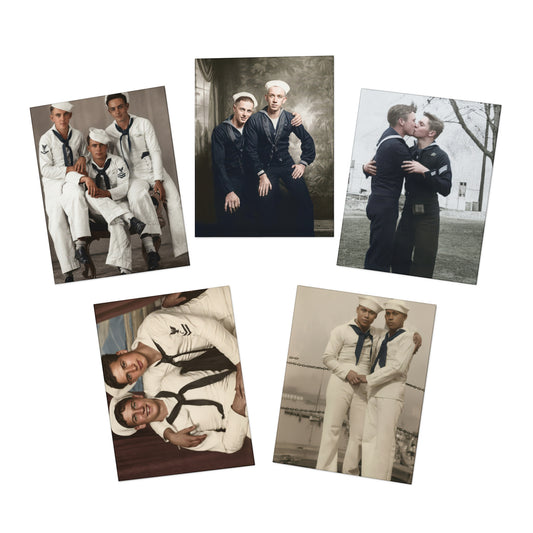
Ephemera of Us Collection – Vintage Naval Portrait Greeting Cards (5-Pack)
Regular price €21,95 EURRegular priceUnit price per -
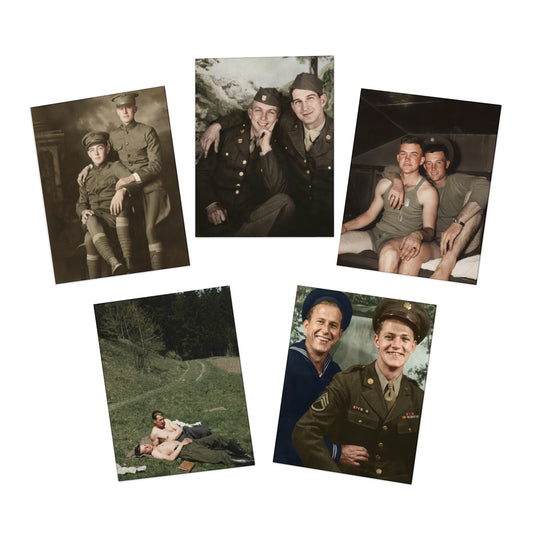
paire Collection – Vintage Military Portrait Greeting Cards (5-Pack) | Ephemera of Us
Regular price €21,95 EURRegular priceUnit price per -
nager Collection – Vintage Swimming Portrait Greeting Cards (5-Pack) | Ephemera of Us | Blank Note Cards
Regular price €21,95 EURRegular priceUnit price per