This vintage photograph is part of the Ephemera of Us: Vintage Photo Collection, within the section titled “athlétisme” — the French word for athletics. This designation reflects the physical culture movement of the late nineteenth and early twentieth centuries, when organized sport, strength training, and competitive athletics were understood not only as displays of physical prowess but also as expressions of discipline, character, and mutual respect.
While it is impossible — and historically inappropriate — to determine the sexuality or personal identities of the individuals depicted, the composition preserves a powerful moment of embodied connection shaped by sport. Athletic practice, particularly in wrestling and other forms of physical training, required trust, balance, and close coordination. The proximity evident in such images is inseparable from the discipline's demands. Scholars of physical culture have noted that early athletic environments often fostered intense bonds of camaraderie, mentorship, and shared striving. These photographs document not only competition but also cooperation — a mutual reliance that defines sportsmanship in its most literal sense.
The image presented here has undergone careful digital preservation using contemporary restoration technologies, including AI-assisted stabilization, tonal repair, and historically guided colorization. All interventions were directed by archival conservation principles and fine-art print standards, ensuring the retention of period character, natural tonal modeling, and photographic softness. The goal is not reinterpretation, but legibility — safeguarding a fragile visual record of athletic life and the social worlds that formed around it.
Original Photograph Record
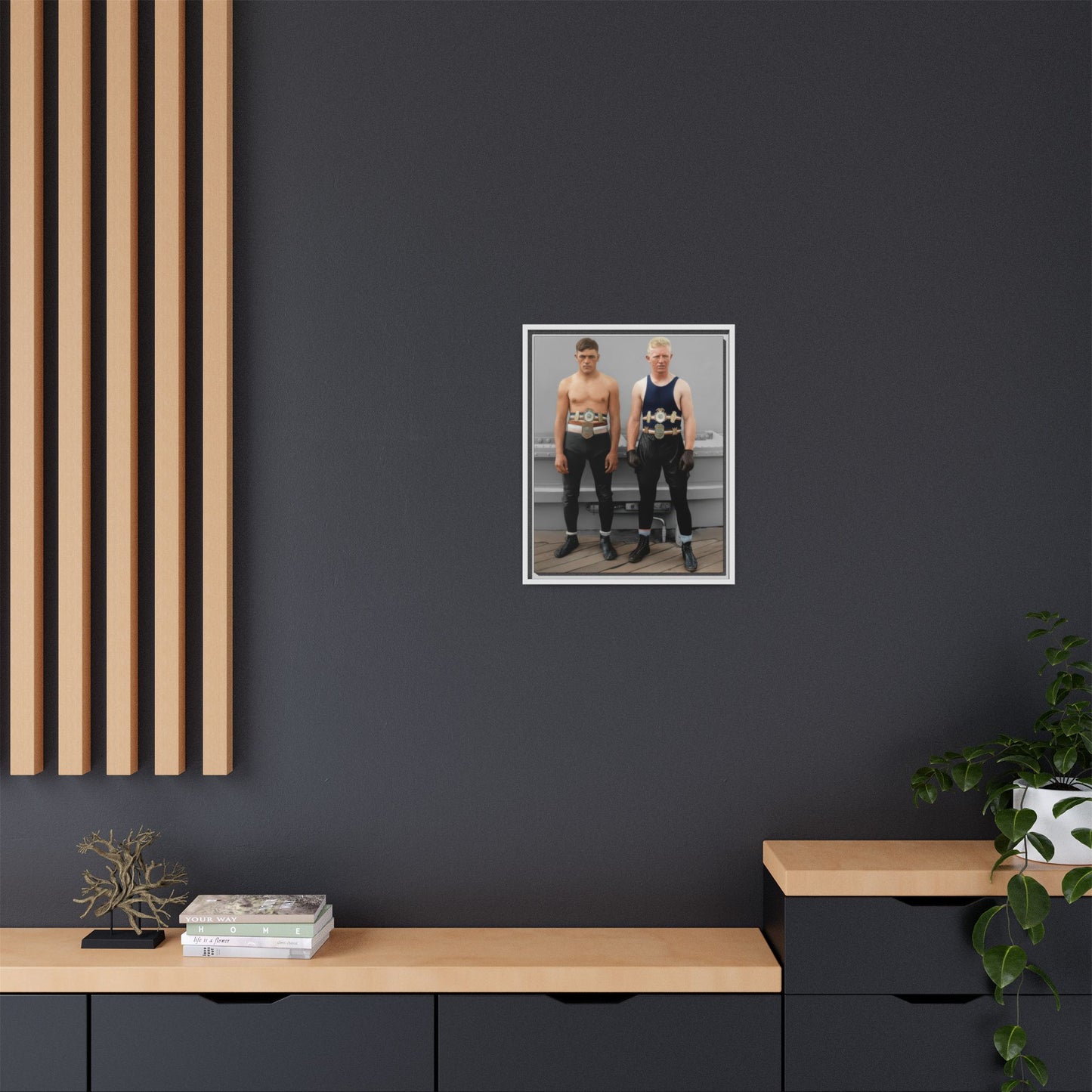
Title: Two Athletes Wearing Championship Belts on a Wooden Deck
Date (estimated): circa 1910–1920
The estimated date is based on observable clothing and photographic characteristics. The men wear form-fitting athletic trousers, lace-up boots, and wide championship-style belts with large circular center plates. One subject wears a sleeveless athletic singlet; the other appears bare-chested. Their short hairstyles are consistent with early twentieth-century grooming conventions. The setting includes a wooden-plank deck and visible ship or industrial piping elements, suggesting an outdoor maritime or industrial environment typical of this period. The tonal range and paper characteristics are consistent with early gelatin silver processes widely used from the 1900s through the 1920s.
Photographer: Unknown
Place of Production: Unknown
Medium: Gelatin silver print (probable)
Dimensions: Small- to medium-format vernacular print, 3.5 x 5.5 inches
Original Photo – Condition & Preservation Status
The print exhibits noticeable tonal fading, particularly in highlight areas across skin and background surfaces. Contrast appears moderately compressed, reducing separation between midtones and lighter areas. Minor surface speckling and faint abrasions are visible, consistent with age-related handling wear. The image displays slight overall warming or yellowing typical of aged photographic paper. Despite these conditions, figure outlines and costume details remain legible. Conservation attention would primarily address stabilizing the tonal balance and preventing further surface deterioration.
Material, Process & Historical Placement
The matte surface, broad tonal gradation, and absence of albumen gloss suggest a gelatin silver developing-out paper process. This process became the dominant photographic medium in the early twentieth century due to its stability and reproducibility. The standardized appearance and informal outdoor setting are consistent with vernacular athletic portraiture during a period when organized sport and competitive exhibitions gained widespread public attention. Provenance information is absent, limiting more specific attribution of geographic origin or event context.
Athlétisme 002 is a vintage photograph reproduction presented as framed canvas wall art, based on a historical image showing two men posed in athletic dress with boxing gloves, fitted leggings, and wide championship-style belts. Reproduced as a museum-quality matte canvas, this piece preserves the visual impact and structured simplicity of the original photograph while offering a refined presentation for contemporary interiors.
Estimated to date from circa 1915 to 1925, the image reflects the visual culture of early 20th-century sporting portrait photography. The scene is rooted in physical culture and prizefighting traditions, where formal studio or staged athletic portraits documented costume, posture, and sporting identity through direct frontal presentation.
Visually, the composition is defined by the pairing of the two standing figures against a spare industrial or deck-like setting. The dark athletic garments, metallic belt details, and restrained background create a strong graphic contrast that gives the image clarity and boldness. The restored presentation retains period softness and historical restraint while making the original photograph more legible for modern display.
As home décor, this framed matte canvas works especially well in studies, offices, gyms, loft interiors, libraries, and gallery walls. It offers a thoughtful way to bring historical photography, boxing imagery, and early athletic portraiture into a space with quiet authority.
Why You’ll Love It
- Bold early sporting portrait with strong graphic presence
- Features boxing gloves, leggings, and championship-style belts
- Adds archival, athletic, and historical character to a room
- Restored for display while preserving period softness and tone
- A compelling piece for collectors of vintage boxing and physical culture photography
Product Features
- Museum-quality matte canvas
- Cotton and polyester canvas
- Archival inks
- Pine wood frame
- Frame colors: black, espresso, white
Multiple size options
- 8×10
- 11×14
- 16×20
________________________________________
Optional Giclée Prints Available upon request. For inquiries, please contact: info at waltandpete dot com