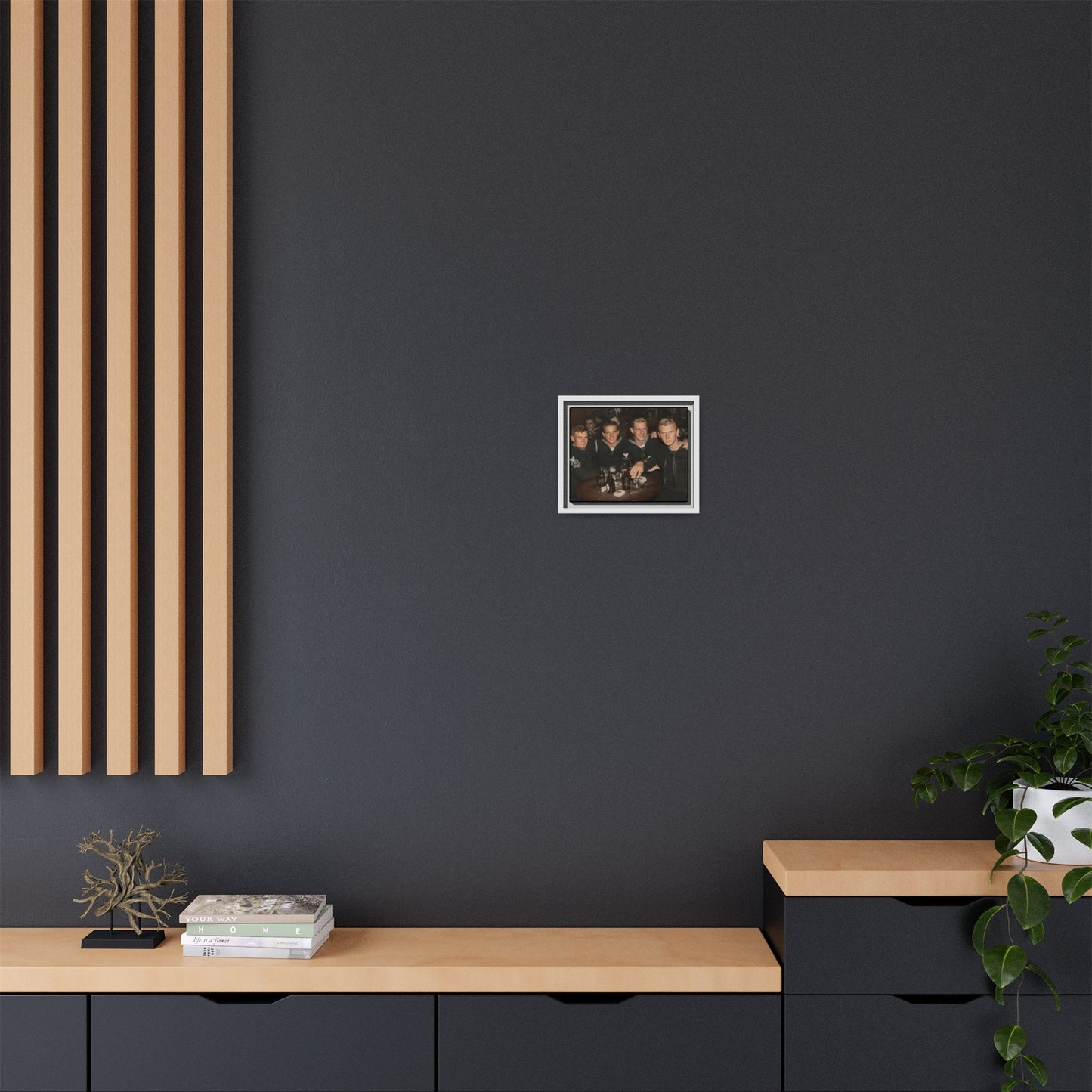
This vintage photograph is part of the Ephemera of Us: Vintage Photo Collection, within the section titled “hommes” — the French word for “men.” This designation centers everyday male life: workspaces, cafés and bars, boarding houses, streets, workshops, and informal interiors. The images gathered here document routine existence — labor, leisure, waiting, conversation — the ordinary rhythms that structured male social worlds in the late nineteenth and early twentieth centuries.
While it is impossible — and historically inappropriate — to determine the sexuality or personal identities of the individuals depicted, photographs of men in shared environments hold significance within queer historical scholarship. Public houses, factory floors, military quarters, rented rooms, and social clubs were spaces where male companionship unfolded visibly and habitually. These were not necessarily spaces defined by sexuality, but they were spaces shaped by proximity, camaraderie, rivalry, dependence, and mutual recognition. The camera occasionally preserved those moments of presence — a shared drink, a gesture of familiarity, a posture of ease — that complicate modern assumptions about emotional restraint and rigid masculinity.
Each image presented here has undergone careful digital preservation using contemporary restoration technologies, including AI-assisted stabilization, tonal repair, and historically guided colorization. All interventions were directed by archival conservation principles and fine-art print standards, ensuring retention of period character, material authenticity, and photographic softness. The aim is not reinterpretation, but legibility — safeguarding fragile records of everyday male life and the layered social worlds in which queer histories quietly resided.
Original Photograph Record
Title: Four Uniformed Sailors Seated at Table in Interior Setting
Date (estimated): c. 1942–1945
The naval uniforms, including dark jumper-style tops with eagle insignia and rating badges, correspond to United States Navy enlisted dress typical of the Second World War period. Hairstyles and the interior leisure setting are consistent with early-to-mid 1940s wartime imagery. The bordered print format and tonal qualities align with mid-twentieth-century photographic papers.
Photographer: Unknown
Place of Production: Unknown
Medium: Gelatin silver print (probable)
Dimensions: Small-format print with white border, 4 x 6 in.
Original Photo – Condition & Preservation Status
The print shows moderate yellowing of the border and slight overall tonal warming, consistent with aged gelatin-silver paper. Shadow areas exhibit mild tonal compression, particularly in dark, uniform fabric, resulting in reduced fold detail. Highlights remain legible, though there is some flattening in facial areas due to strong directional lighting at the time of exposure. Minor surface abrasions and small handling marks are visible on the image surface. No significant tears or losses are apparent within the visible margins. These condition characteristics slightly reduce micro-detail and contrast but do not substantially compromise overall legibility. Stabilization, controlled storage, and high-resolution digitization would support long-term preservation.
Material, Process & Historical Placement
The tonal structure—deep blacks, moderate midtone separation, and matte surface—indicates a gelatin silver developing-out paper, the dominant photographic process of the 1930s–1950s. The standardized bordered format suggests machine-produced enlarging paper rather than mounted studio card stock. This type of informal group portrait reflects the widespread accessibility of personal cameras and commercial processing during wartime, when servicemen frequently documented social environments. Precise provenance remains unknown due to the absence of inscriptions or studio marks.
Collector’s Summary
c. 1942–1945 gelatin silver snapshot depicting four uniformed sailors seated at a table in an interior social setting; moderate border yellowing and tonal compression typical of mid-twentieth-century vernacular military photography.