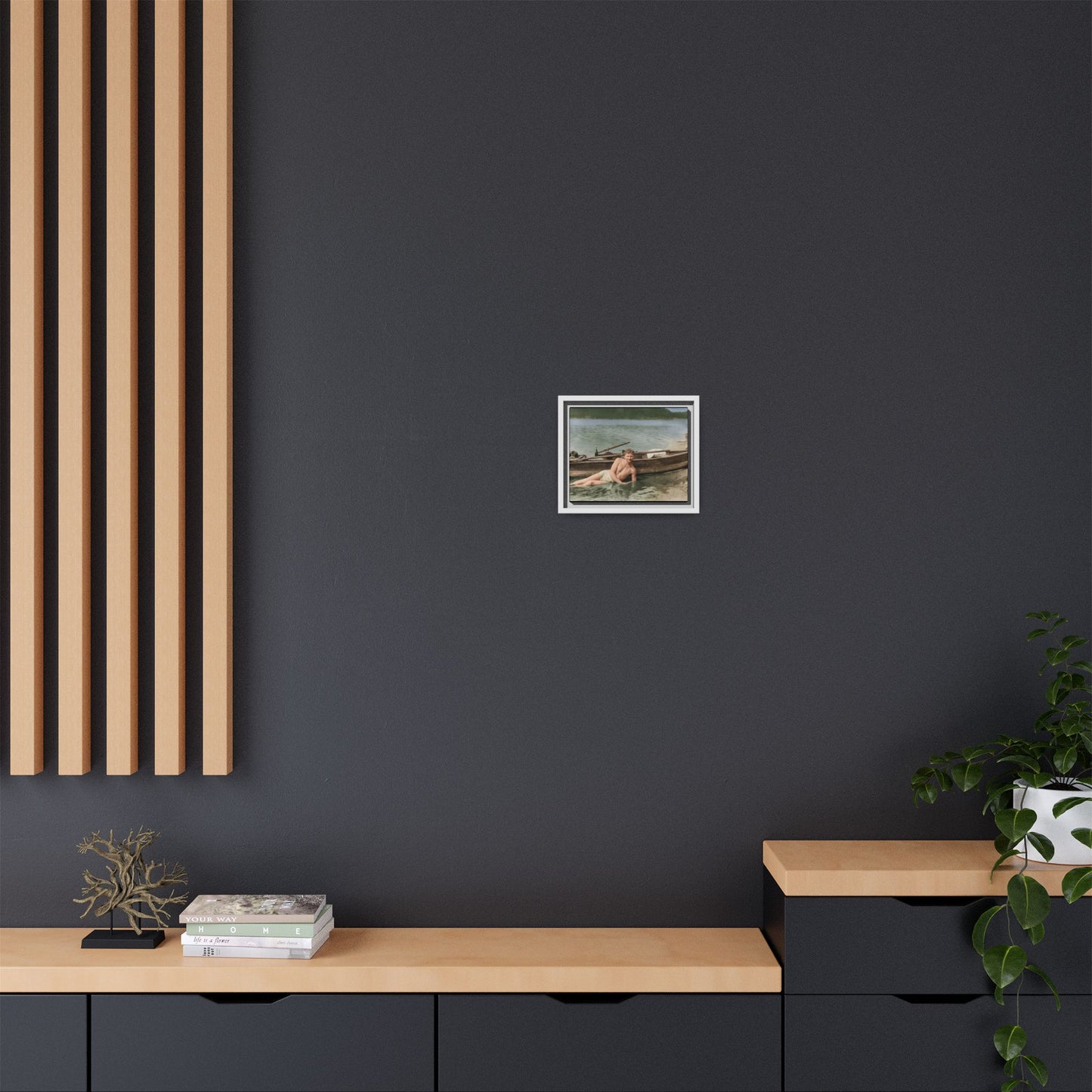
This vintage photograph is part of the Ephemera of Us: Vintage Photo Collection, within the section titled “nager” — the French word for swimming. This designation reflects not only the act itself but also the cultural atmosphere surrounding aquatic life in the late nineteenth and early twentieth centuries. Public beaches, riverbanks, lakes, and seaside resorts became spaces of recreation, leisure, and renewal. Swimming was associated with health, vitality, and modernity, yet it also offered something quieter: immersion, suspension, and a temporary release from the rigid structures of daily life.
Water has long been understood as a space of solace — a place where the body is both supported and unburdened. Early bathing culture required trust in one’s own balance and breath, but it also unfolded in shared environments. Whether standing barefoot on a dock, resting beside a small boat, or posing in wool swimwear along a shoreline, individuals in these photographs occupy liminal spaces between land and water — between stillness and motion. The resulting images capture a sense of openness and vitality shaped by light, air, and proximity.
While it is impossible — and historically inappropriate — to determine the sexuality or personal identities of the individuals depicted, aquatic settings have been recognized by scholars as environments where social codes could briefly loosen. Beaches and swimming areas allowed new forms of bodily visibility and camaraderie. The ease and physical freedom visible in such photographs complicate modern assumptions about reserve and modesty in earlier eras. These images preserve moments of embodied presence shaped by recreation, companionship, and the shared exhilaration of water.
The image presented here has undergone careful digital preservation using contemporary restoration technologies, including AI-assisted stabilization, tonal repair, and historically guided colorization. All interventions were directed by archival conservation principles and fine-art print standards, ensuring the retention of period character, natural tonal modeling, and photographic softness. The goal is not reinterpretation, but legibility — safeguarding a fragile visual record of leisure, vitality, and the fluid social worlds that formed at the water’s edge.
Original Photograph Record
Title: Reclining Man in Shallow Water Beside Wooden Rowboat
Date (estimated): circa 1925–1935
The estimated date is based on the subject’s short, side-parted hairstyle consistent with late 1920s to early 1930s grooming trends, the style of light-colored swim trunks with a high waist and short leg, and the informal outdoor recreational setting typical of interwar vernacular photography. The small-format print with narrow white borders also aligns with commercially available amateur photographic paper of the period.
Photographer: Unknown
Place of Production: Unknown
Medium: Gelatin silver print
Dimensions: Small-format snapshot print, 4 x 6 inches
Original Photo – Condition & Preservation Status
The print exhibits overall tonal warming consistent with aged gelatin silver paper. Mild yellowing is visible across the image surface, particularly in highlight areas. Edge wear and softened corners suggest handling and storage without protective housing. Minor surface abrasions and small scattered spots are visible in the water and sky areas.
Contrast appears moderately compressed, with some loss of highlight separation in the subject’s torso and reflective water areas. Shadow detail in the boat’s interior remains legible but slightly subdued. No severe tears or structural breaks are visible in the provided image.
These condition factors reduce tonal clarity and fine detail discrimination but do not significantly impair overall legibility. Conservation or stabilization would focus on slowing further paper oxidation and surface wear.
Material, Process & Historical Placement
The tonal scale, matte surface, and standardized small snapshot format indicate a gelatin-silver developing-out paper (DOP) print. The consistent border and informal composition align with amateur camera use during the widespread availability of portable roll-film cameras in the interwar period.
The recreational lakeside setting and casual swimwear reflect the increasing popularity of leisure photography during the 1920s–1930s, when personal cameras became more accessible to middle-class consumers.
Due to a lack of inscription, studio imprint, or provenance, attribution remains limited.
Collector’s Summary
Circa 1925–1935 gelatin silver snapshot depicting a reclining man in shallow water beside a wooden rowboat. The print shows moderate tonal warming and edge wear, typical of vernacular photographs of the interwar period, and represents informal leisure documentation in early twentieth-century amateur photography.