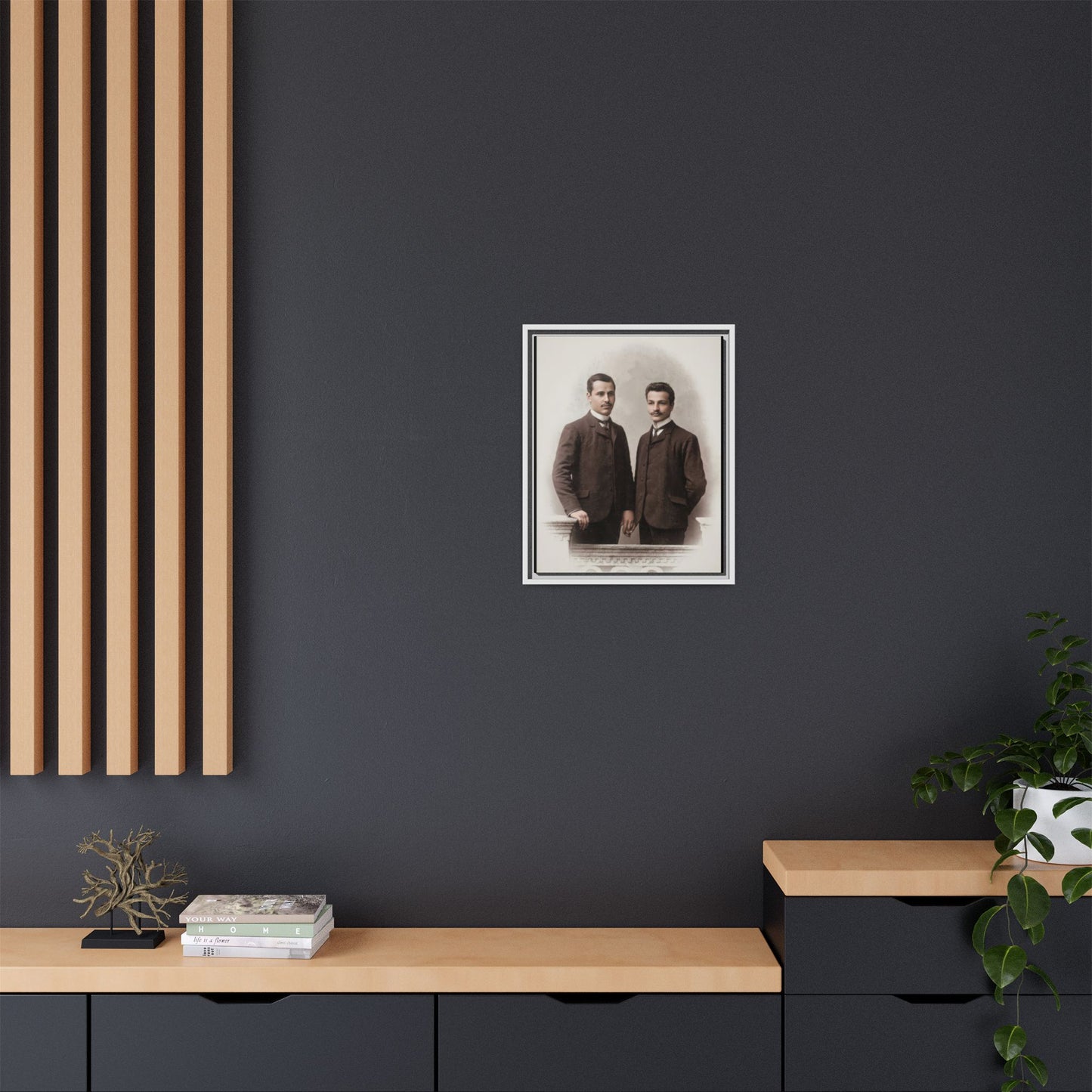
This vintage photograph is part of the Ephemera of Us: Vintage Photo Collection, within the section titled “paire” — the French word for “pair.” The designation reflects the presence of two men pictured together in a moment of visible closeness. While it is impossible — and historically inappropriate — to determine the sexuality or personal identities of the individuals depicted, the composition conveys a quiet intimacy through gesture, proximity, and shared gaze. Such images have often been described by scholars as representations of “affectionate men,” a visual category that acknowledges documented forms of male tenderness and companionship in earlier eras. Whether understood as friendship, kinship, or something more personal, the photograph preserves a moment of male relational closeness that challenges modern assumptions about emotional expression between men.
The image presented here has undergone careful digital preservation using contemporary restoration technologies, including AI-assisted stabilization, tonal repair, and historical colorization. All interventions were guided by archival photo conservation principles and fine-art print standards, with the aim of maintaining period character, photographic softness, and material authenticity while improving legibility for modern viewers. It stands as a testament both to the layered ways intimacy was lived and recorded in the past and to evolving methods used to safeguard fragile visual history in the present.t.
Original Photograph Record
Title: Two Men Standing Beside Studio Balustrade
Date (estimated): c. 1900–1910
Photographer: V. Velev (studio imprint)
Place of Production: Plovdiv, Bulgaria
Medium: Gelatin silver photograph (probable)
Dimensions: Unknown; cabinet-card format
Original Photo – Condition & Preservation Status
The print demonstrates condition characteristics typical of early twentieth-century mounted studio photographs. There is mild tonal compression in the darker areas of the jackets, with some reduction of separation in the midtones. The image base shows a general warm cast consistent with aging of the photographic paper. Light surface abrasions and small specks are visible, particularly against the plain background. Minor edge wear and softening are apparent along the mount margins, though no major structural losses are evident in the visible view. Silvering or mirror-like oxidation is not clearly present.
These factors slightly diminish micro-contrast and fine detail, especially in facial modeling and textile texture. Conservation or digital restoration would primarily improve clarity and legibility while preserving the original object's documentary value.
Material, Process & Historical Placement
The neutral grayscale palette, moderate contrast, and smooth paper surface suggest a gelatin silver developing-out print rather than an albumen print. A presentation on a commercially printed mount with decorative typography corresponds to cabinet-card conventions that persisted into the early twentieth century. The architectural studio prop and simplified background align with standardized professional portrait environments intended for efficient production.
The mount carries Cyrillic text identifying the studio of V. Velev in Plovdiv, providing firm attribution to the business location, though not to a specific camera operator. In the absence of additional documentation, the identities of the sitters remain Unknown. The object reflects a period when regional studios participated in internationally recognizable portrait formats while serving local markets. Interpretation is therefore limited to material and visual evidence rather than extended provenance.
Collector’s Summary
An early twentieth-century cabinet-card portrait produced by the V. Velev studio of Plovdiv, likely a gelatin silver print, showing two men posed beside a balustrade. Light wear and tonal warming are present, making it a solid representative example of regional commercial studio practice.