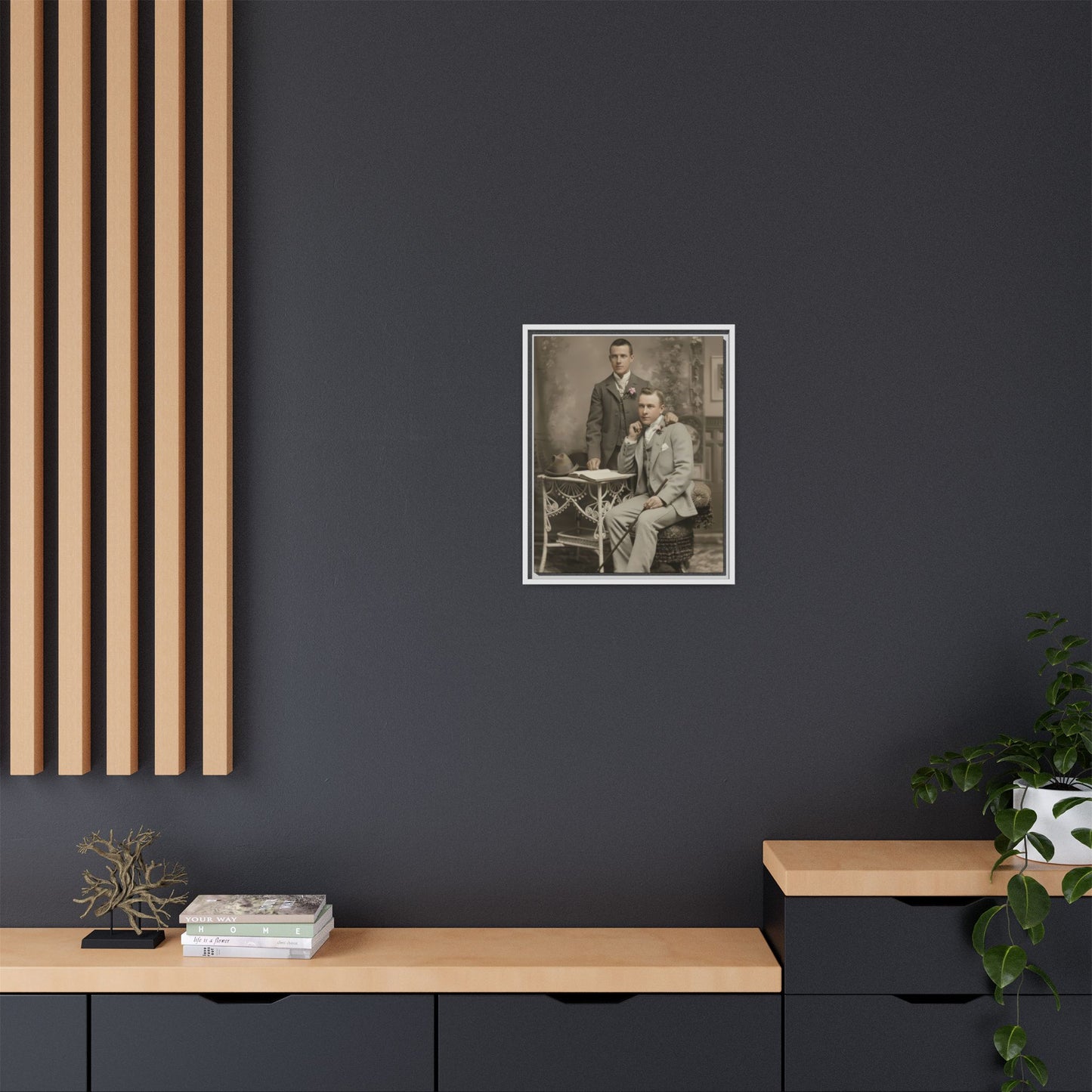
This vintage photograph is part of the Ephemera of Us: Vintage Photo Collection, within the section titled “paire” — the French word for “pair.” The designation reflects the presence of two men pictured together in a moment of visible closeness. While it is impossible — and historically inappropriate — to determine the sexuality or personal identities of the individuals depicted, the composition conveys a quiet intimacy through gesture, proximity, and shared gaze. Such images have often been described by scholars as representations of “affectionate men,” a visual category that acknowledges documented forms of male tenderness and companionship in earlier eras. Whether understood as friendship, kinship, or something more personal, the photograph preserves a moment of male relational closeness that challenges modern assumptions about emotional expression between men.
The image presented here has undergone careful digital preservation using contemporary restoration technologies, including AI-assisted stabilization, tonal repair, and historical colorization. All interventions were guided by archival photo conservation principles and fine-art print standards, with the aim of maintaining period character, photographic softness, and material authenticity while improving legibility for modern viewers. It stands as a testament to both the layered ways intimacy was lived and recorded in the past and to the evolving methods used to safeguard fragile visual history in the present.
Original Photograph Record
Title: Standing and Seated Man with Table, Hat, and Cane in Studio Interior
Date (estimated): c. 1890–1900
Photographer: M. Collin
Place of Production: Ashland, Pennsylvania
Medium: Albumen print mounted on cabinet card (probable)
Dimensions: Cabinet card format; exact size Unknown
Original Photo – Condition & Preservation Status
The mount exhibits moderate yellowing consistent with late nineteenth-century albumen cabinet cards. Edge wear is visible along the perimeter, with minor rounding at the corners. The photographic image shows gentle tonal fading, particularly in midtones of the backdrop, while darker garments maintain readable density.
Small specks and light surface abrasions appear across the print, but no pronounced tears or emulsion losses are evident at the present resolution. Highlight areas on the faces show a slight reduction of separation, typical of albumen materials as the binder ages and reflectivity changes.
These issues modestly affect clarity yet leave primary visual information intact. Archival rehousing and minimized handling would reduce risk of further mechanical wear. A high-quality reference surrogate would be advisable for routine access.
Material, Process & Historical Placement
The warm tonal bias, delicate contrast, and presentation on a commercially printed mount indicate an albumen print, a dominant studio process for portrait photography in the final decades of the nineteenth century. The decorative painted backdrop, wicker furnishings, and formal studio props correspond to common professional practices of that period.
Clothing supports this estimate: fitted sack and lounge suits, high-buttoned waistcoats, boutonnieres, and a walking cane align with styles prevalent in the 1890s. The studio imprint identifying M. Collin of Ashland, Pennsylvania, provides firm geographic attribution, though no additional business information is present.
In the absence of inscriptions or sitter identification, personal histories remain Unknown.
Collector’s Summary
A cabinet card albumen portrait from approximately 1890–1900, produced by M. Collin in Ashland, Pennsylvania, depicting two men posed with studio furnishings. Light age wear and characteristic albumen fading make it a strong example of late nineteenth-century commercial portrait practice.