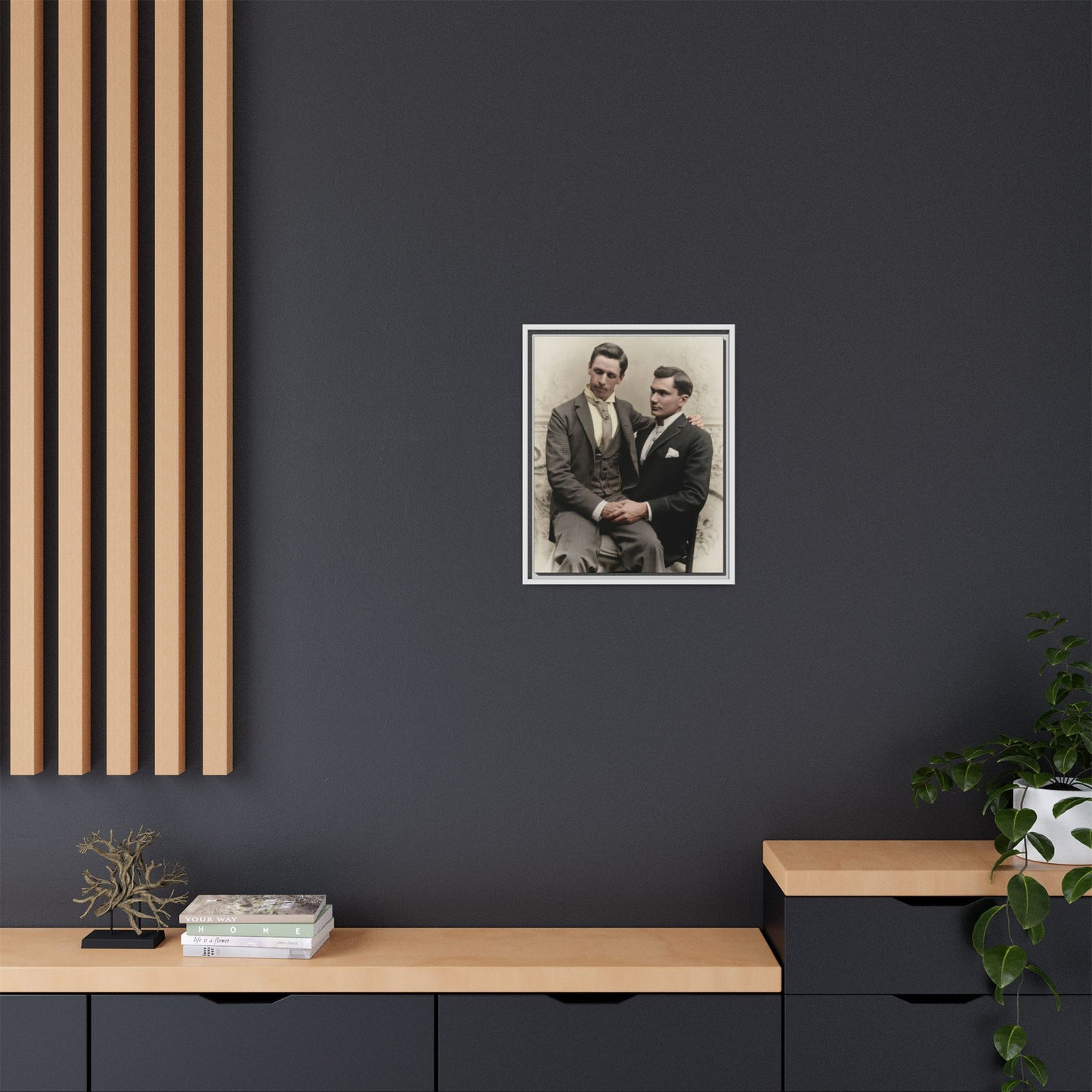
This vintage photograph is part of the Ephemera of Us: Vintage Photo Collection, within the section titled “paire” — the French word for “pair.” The designation reflects the presence of two men pictured together in a moment of visible closeness. While it is impossible — and historically inappropriate — to determine the sexuality or personal identities of the individuals depicted, the composition conveys a quiet intimacy through gesture, proximity, and shared gaze. Such images have often been described by scholars as representations of “affectionate men,” a visual category that acknowledges documented forms of male tenderness and companionship in earlier eras. Whether understood as friendship, kinship, or something more personal, the photograph preserves a moment of male relational closeness that challenges modern assumptions about emotional expression between men.
The image presented here has undergone careful digital preservation using contemporary restoration technologies, including AI-assisted stabilization, tonal repair, and historical colorization. All interventions were guided by archival photo conservation principles and fine-art print standards, with the aim of maintaining period character, photographic softness, and material authenticity while improving legibility for modern viewers. It stands as a testament to both the layered ways intimacy was lived and recorded in the past and to the evolving methods used to safeguard fragile visual history in the present.
Original Photograph Record
Title: Two Men Seated Together in Studio Portrait
Date (estimated): c. 1890–1900
Photographer: W. E. Armstrong
Place of Production: Delaware, Ohio
Medium: Albumen print mounted on card
Dimensions: Cabinet card format; 4.25 x 6.5
Original Photo – Condition & Preservation Status
The photograph exhibits a warm tonal character typical of albumen materials, with mild overall yellowing of the paper support. Contrast remains sufficient for clear reading of facial features, garments, and decorative studio elements. Some compression is visible in the darker suit areas, while lighter fabrics retain legibility.
Minor abrasions and small surface marks are present, particularly in the upper background. The mount shows light edge wear consistent with handling. No major cracks, losses, or structural deformations are evident from the visible image. There is no pronounced silver mirroring detectable at this scale.
The noted aging effects are common for late nineteenth-century prints and do not significantly obscure content. Preventive conservation and controlled storage would mitigate further fading and surface deterioration.
Material, Process & Historical Placement
The image’s warm hue, smooth mid-tones, and presentation on a commercially printed card mount indicate an albumen print, the prevailing studio process for much of the final decades of the nineteenth century. The decorative border and printed photographer’s credit align with cabinet card conventions widely distributed in North America during this period.
Dress details support the estimate. High, stiff collars, waistcoats, tailored jackets with narrow lapels, and carefully groomed hair, parted and brushed back, correspond to the fashion prevalent in the 1890s. The formal seated arrangement within a controlled studio interior further reflects the era's professional portrait practice.
While the mount identifies the photographer and city, no additional information regarding the sitters survives. The absence of accompanying documentation limits further attribution.
This piece is a vintage photograph reproduced as framed canvas wall art, carefully restored from an early twentieth-century historical portrait. The image presents two men posed closely together in a formal studio composition, reproduced as a museum-quality archival canvas print that preserves the visual character and historical presence of the original photograph.
In the late nineteenth and early twentieth centuries, studio portraiture was one of the most important ways individuals documented their personal appearance, social presence, and significant relationships. Professional photographers often arranged subjects in carefully staged poses using controlled lighting and refined interior settings. Such portraits reflected the period's formal visual language while also preserving gestures of companionship and social closeness within a highly composed photographic tradition.
This photograph is notable for its poised and intimate composition. The two figures are dressed in tailored formalwear, including structured jackets, waistcoats, neckwear, and a pocket square, all rendered with remarkable clarity. Their pose—one seated slightly across the other’s lap, with an arm resting across the shoulder and hands joined at the center—creates a visually balanced composition and a strong interpersonal presence. Soft studio lighting and a restrained tonal palette heighten the portrait's elegance, while the plain interior backdrop keeps the focus on expression, posture, and textile details.
As framed canvas wall art, this historical portrait adds refinement and quiet narrative to living rooms, studies, offices, libraries, and gallery walls. Its formal composition and timeless visual character make it especially well-suited to interiors that value historical depth, portraiture, and museum-inspired décor. Whether displayed alone or within a broader curated arrangement, it offers a contemplative and visually grounded presence.
Why You'll Love It
- Authentic early twentieth-century studio portraiture
- Museum-style restoration that preserves historic character
- Elegant wall décor with timeless visual presence
- Rich clothing detail and formal photographic composition
- Part of the curated Walt & Pete® archival collection
Product Features
- Museum-quality matte canvas
- Cotton and polyester canvas
- Archival inks
- Pine wood frame
- Frame colors: black, espresso, white
Multiple size options
- 8×10
- 11×14
- 16×20
________________________________________
Optional Giclée Prints Available upon request. For inquiries, please contact: info at waltandpete dot com