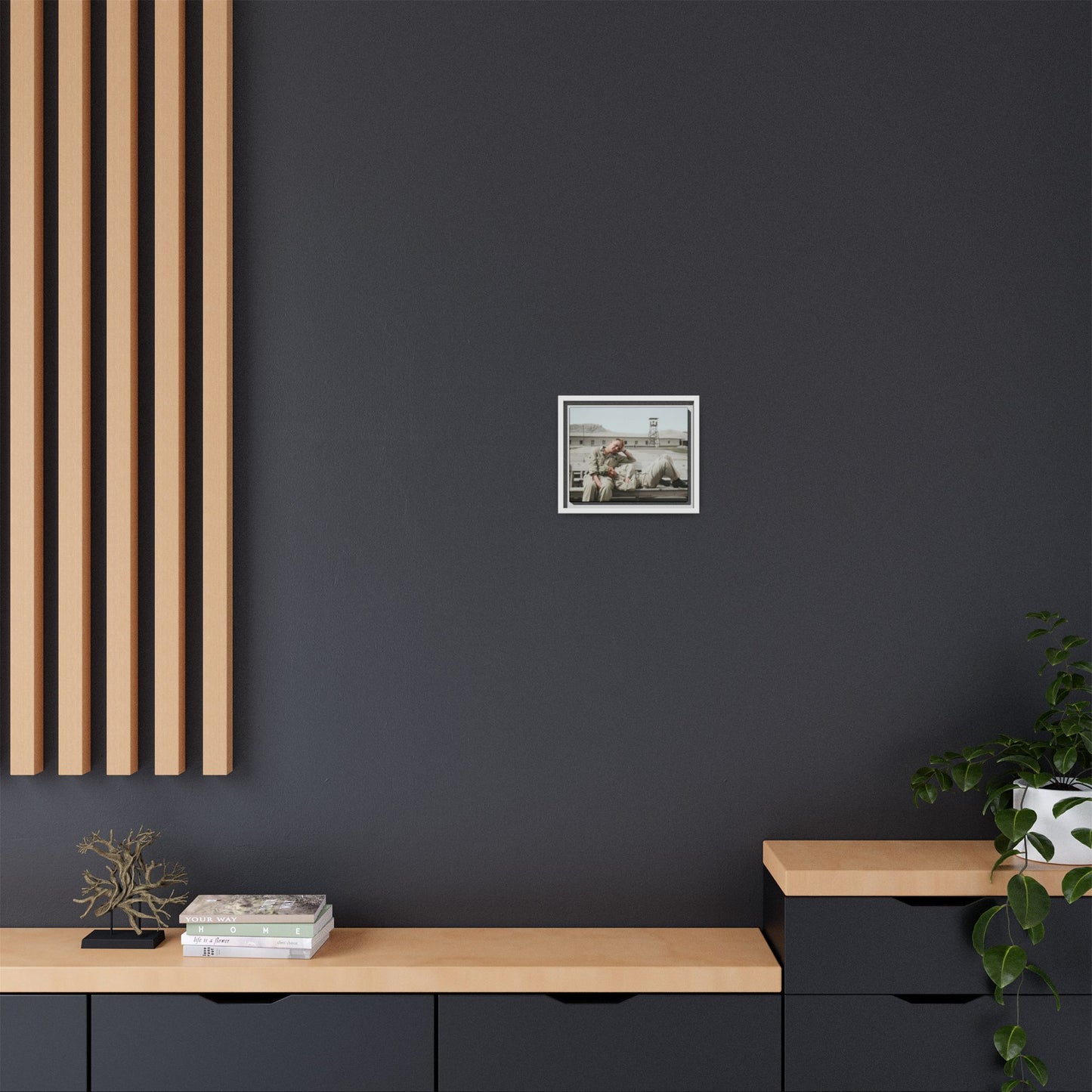
This vintage photograph is part of the Ephemera of Us: Vintage Photo Collection, within the section titled “paire” — the French word for “pair.” The designation reflects the presence of two men pictured together in a moment of visible closeness. While it is impossible — and historically inappropriate — to determine the sexuality or personal identities of the individuals depicted, the composition conveys a quiet intimacy through gesture, proximity, and shared gaze. Such images have often been described by scholars as representations of “affectionate men,” a visual category that acknowledges documented forms of male tenderness and companionship in earlier eras. Whether understood as friendship, kinship, or something more personal, the photograph preserves a moment of male relational closeness that challenges modern assumptions about emotional expression between men.
The image presented here has undergone careful digital preservation using contemporary restoration technologies, including AI-assisted stabilization, tonal repair, and historical colorization. All interventions were guided by archival photo conservation principles and fine-art print standards, with the aim of maintaining period character, photographic softness, and material authenticity while improving legibility for modern viewers. It stands as a testament to both the layered ways intimacy was lived and recorded in the past and to the evolving methods used to safeguard fragile visual history in the present.
Original Photograph Record
Title: Two Uniformed Men Reclining on a Wooden Bench Before Barracks and a Watchtower
Date (estimated): circa 1942–1948
Photographer: Unknown
Place of Production: Unknown
Medium: Gelatin silver print
Dimensions: Small-format snapshot print, 2.5 3.5 in.
Original Photo – Condition & Preservation Status
The print exhibits moderate contrast with slightly compressed highlights in the sky and lighter architectural surfaces. Midtones are generally stable, and facial features remain legible. The surface appears matte to semi-matte, consistent with mid-20th-century gelatin silver developing-out paper.
Minor condition issues include small scattered white specks and faint surface abrasions, most visible in the sky and darker clothing areas. There is mild overall yellowing of the paper base consistent with age. Edge wear is minimal at this scale, with no major tears or creases evident. Silver mirroring is not clearly observable.
These characteristics modestly affect tonal separation but do not significantly impair the readability of the image. Standard archival storage in acid-free enclosures and controlled environmental conditions would support long-term preservation.
Material, Process & Historical Placement
The tonal range, grayscale structure, and paper characteristics indicate a gelatin silver print, the dominant black-and-white photographic process for vernacular and military-related imagery during the 1940s.
Clothing provides primary dating evidence. Both individuals wear light-colored military-style uniforms with long sleeves and insignia patches visible on the upper arms. The hairstyle and tailoring are consistent with mid-20th-century military dress.
The architectural background includes low, barracks-style buildings and a wooden watchtower. The presence of uniformed individuals and institutional architecture suggests a military training or base environment; however, the specific branch, location, or installation cannot be verified.
The format and informal composition are consistent with personal snapshot photography widely practiced during and immediately after the Second World War, when portable cameras became common among service members. Absence of studio imprint or inscription limits further attribution.
Paire 096 is a reproduction of a vintage photograph presented as framed canvas wall art, featuring a historical portrait of two soldiers in a relaxed paired composition on a base setting. As a restored reproduction of a vintage photograph, this historical portrait preserves the soft tonal character and direct visual presence that make mid-century documentary and personal photography so enduring.
This image appears consistent with mid-20th-century military portrait traditions made in informal on-base environments rather than formal studios. The open grounds, barracks-like buildings, and visible watchtower place the scene within a structured military setting, while the casual pose suggests a quieter personal moment within that environment. The image reflects uniform photographic conventions without requiring further identification of branch, rank, or conflict.
Visually, the composition is defined by the wooden bench seating, the broad open yard, pale buildings, and the watchtower rising in the background. The two figures wear practical military clothing and are arranged in a strongly relaxed pose, with one seated upright and the other reclining across the bench with his head resting in the other’s lap. Their posture, the open sky, and the horizontal lines of the base create an image with both stillness and emotional immediacy. Soft light and muted tones give the work a calm, archival atmosphere while the unusual pose makes it especially memorable.
As wall art, Paire 096 lends elegance and historical depth to living rooms, studies, libraries, bedrooms, offices, and gallery walls. Its combination of military setting, relaxed human presence, and preserved archival softness makes it especially well-suited to interiors that value portraiture, historical photography, and visually grounded works with quiet emotional force.
Why You’ll Love It
- Preserves the quiet immediacy of a historical military-base portrait
- Restored and reproduced with a museum-informed archival approach
- Distinguished by relaxed pose, open base setting, and strong visual composition
- Adds refined historical presence to home and office interiors
- A memorable addition to collections of portraiture and archival wall art
Product Features
- Museum-quality matte canvas
- Cotton and polyester canvas
- Archival inks
- Pine wood frame
- Frame colors: black, espresso, white
Multiple size options
- 8×10
- 11×14
- 16×20
________________________________________
Optional Giclée Prints Available upon request. For inquiries, please contact: info at waltandpete dot com