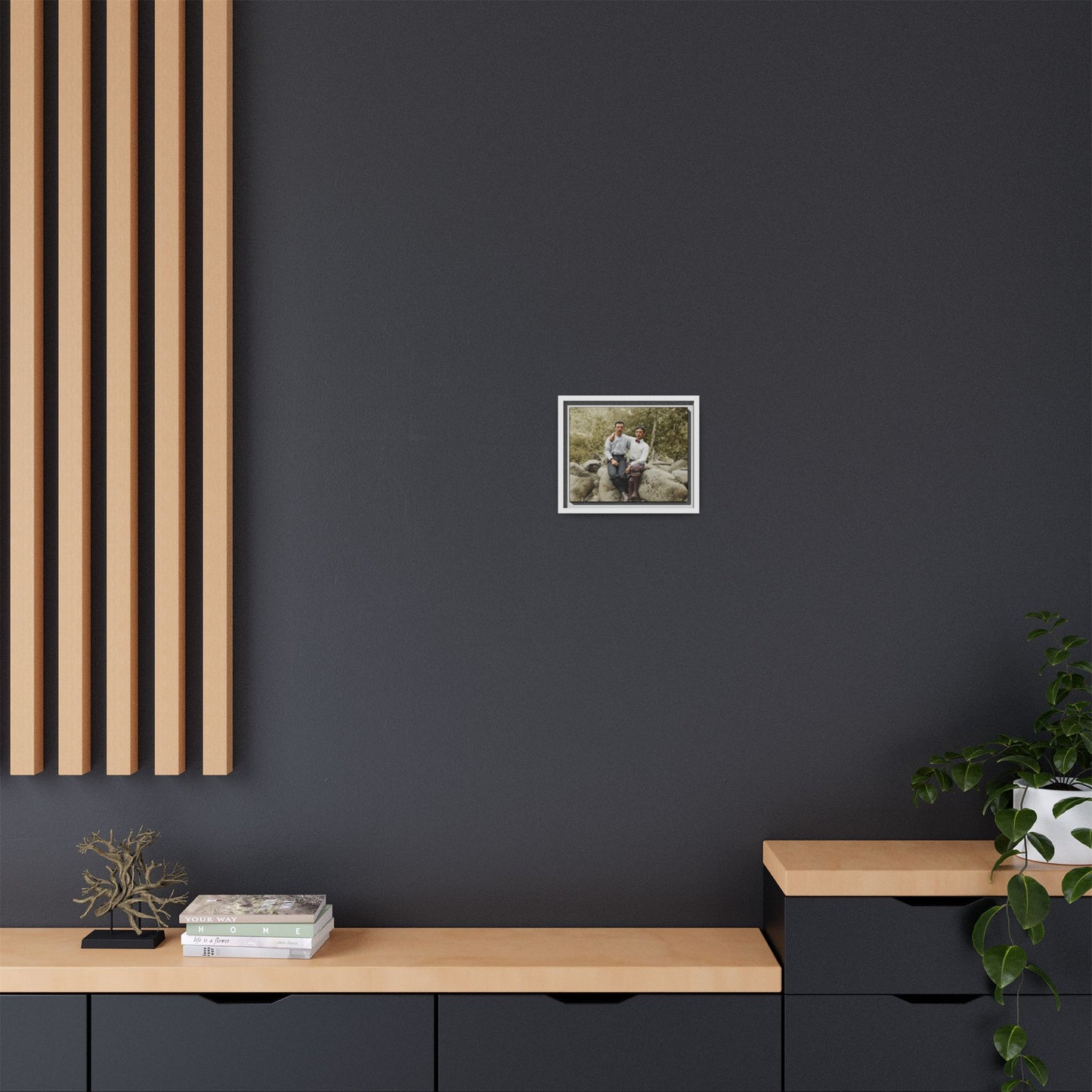
This vintage photograph is part of the Ephemera of Us: Vintage Photo Collection, within the section titled “paire” — the French word for “pair.” The designation reflects the presence of two men pictured together in a moment of visible closeness. While it is impossible — and historically inappropriate — to determine the sexuality or personal identities of the individuals depicted, the composition conveys a quiet intimacy through gesture, proximity, and shared gaze. Such images have often been described by scholars as representations of “affectionate men,” a visual category that acknowledges documented forms of male tenderness and companionship in earlier eras. Whether understood as friendship, kinship, or something more personal, the photograph preserves a moment of male relational closeness that challenges modern assumptions about emotional expression between men.
The image presented here has undergone careful digital preservation using contemporary restoration technologies, including AI-assisted stabilization, tonal repair, and historical colorization. All interventions were guided by archival photo conservation principles and fine-art print standards, with the aim of maintaining period character, photographic softness, and material authenticity while improving legibility for modern viewers. It stands as a testament to both the layered ways intimacy was lived and recorded in the past and to the evolving methods used to safeguard fragile visual history in the present.
Original Photograph Record
Title: Two Men Seated on Rocks in an Outdoor Landscape Setting
Date (estimated): circa 1895–1905
Photographer: Unknown
Place of Production: Unknown
Medium: Albumen print mounted on embossed card stock
Dimensions: Cabinet card format, approximately 4¼ x 6½ inches (estimated)
Original Photo – Condition & Preservation Status
The photograph appears to be an albumen print mounted on a commercially produced embossed card mount. The image exhibits warm tonal coloration consistent with albumen printing, including slight overall yellowing and reduced contrast in shadow areas. Mild tonal fading is visible, particularly in darker foliage and clothing, suggesting gradual silver image oxidation over time.
The decorative mount features embossed floral or scrollwork patterns along the border, indicating a late nineteenth-century presentation style. The mount shows minor edge wear and slight surface discoloration, typical of aged card stock. Small scattered spots and faint abrasions are visible within the image field, especially in lighter sky areas.
These characteristics are consistent with late-nineteenth-century vernacular portrait prints. While legibility of facial features remains clear, contrast compression in the midtones reduces the separation between clothing and the background. Conservation housing in an acid-free sleeve would mitigate further paper and image degradation.
Material, Process & Historical Placement
The warm sepia tone, matte surface, and moderate contrast suggest an albumen print, the dominant photographic printing process from the 1860s through the 1890s, with continued use into the early 1900s. The embossed mount and cabinet card scale support this dating.
Clothing provides further chronological indicators. Both men wear high-collared shirts and narrow bow ties. Trousers are straight-cut and paired with tall stockings and lace-up boots. One subject wears a striped shirt with a flat cap; the other wears a plain shirt with similar headwear. These garments are consistent with informal outdoor attire from the late nineteenth to early twentieth century.
The natural setting—rocks and foliage—suggests an outdoor excursion portrait rather than a formal studio backdrop. Without inscriptions, studio imprints, or provenance, the photographer and specific location remain unknown.
Collector’s Summary
Circa 1895–1905 albumen cabinet card depicting two men seated on rocks in an outdoor setting; mounted on embossed card with mild tonal fading typical of the process and representative of late nineteenth-century vernacular portrait photography.