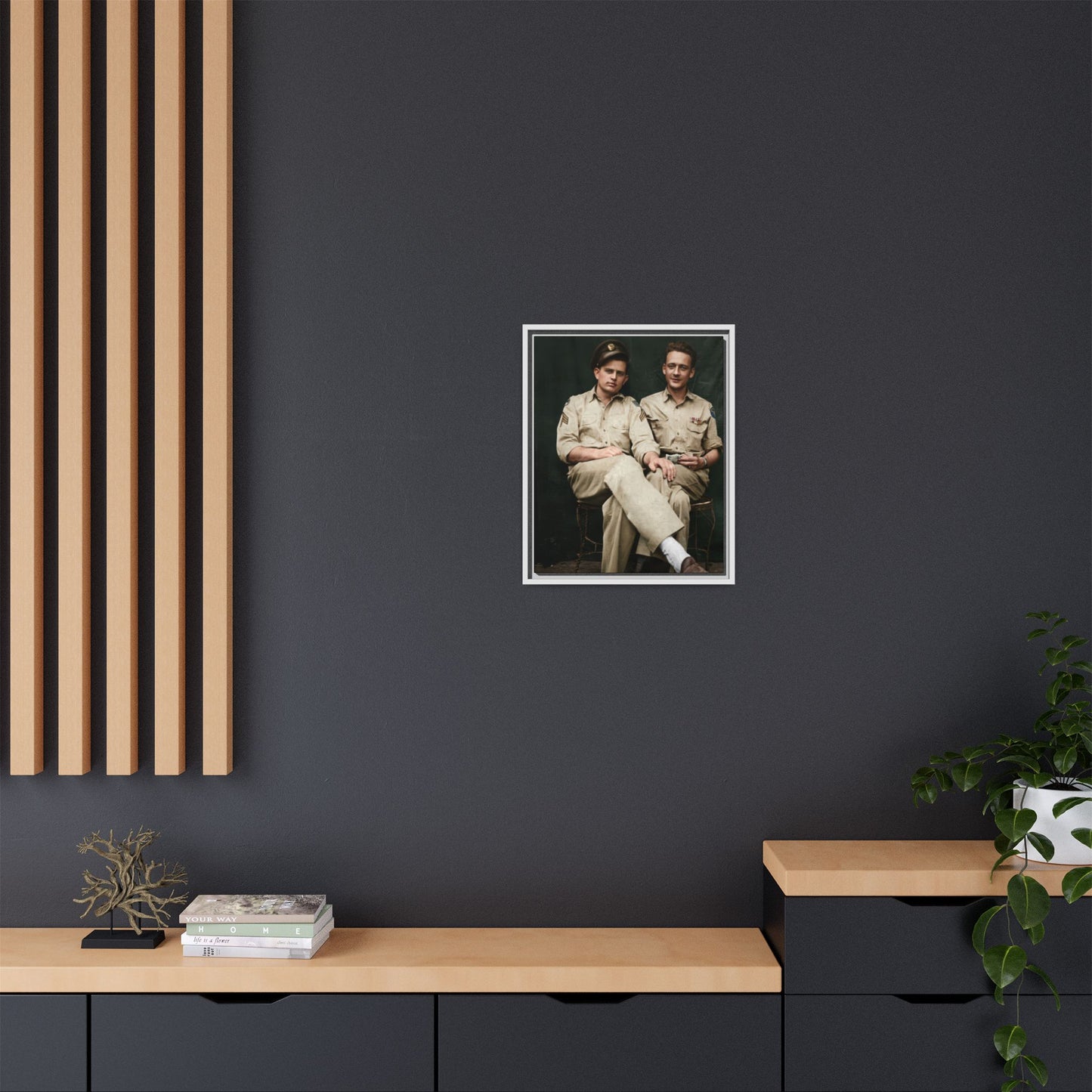
This vintage photograph is part of the Ephemera of Us: Vintage Photo Collection, within the section titled “paire” — the French word for “pair.” The designation reflects the presence of two men pictured together in a moment of visible closeness. While it is impossible — and historically inappropriate — to determine the sexuality or personal identities of the individuals depicted, the composition conveys a quiet intimacy through gesture, proximity, and shared gaze. Such images have often been described by scholars as representations of “affectionate men,” a visual category that acknowledges documented forms of male tenderness and companionship in earlier eras. Whether understood as friendship, kinship, or something more personal, the photograph preserves a moment of male relational closeness that challenges modern assumptions about emotional expression between men.
The image presented here has undergone careful digital preservation using contemporary restoration technologies, including AI-assisted stabilization, tonal repair, and historical colorization. All interventions were guided by archival photo conservation principles and fine-art print standards, with the aim of maintaining period character, photographic softness, and material authenticity while improving legibility for modern viewers. It stands as a testament to both the layered ways intimacy was lived and recorded in the past and the evolving methods used to safeguard fragile visual history in the present.
Original Photograph Record
Title: Two Uniformed Servicemen Seated Before Fabric Studio Backdrop
Date (estimated): circa 1940–1945
The clothing and insignia visible in the photograph suggest a wartime context. One individual wears a U.S. Navy enlisted uniform, including a sailor cap and rating insignia on the sleeve, while the other wears a khaki military shirt with service ribbons and a peaked cap typical of United States armed forces personnel during the Second World War period. The cut of the trousers, shirt pockets, and tie style are consistent with early–mid 1940s military dress regulations. Hairstyles—short, tapered, and parted—also align with grooming standards common among servicemen of that era.
Photographer: Unknown
Place of Production: Unknown
Medium: Gelatin silver print (probable)
Dimensions: Small-format vernacular print; 2.5 x 3.5 in.
Original Photo – Condition & Preservation Status
The photograph exhibits characteristics typical of aged vernacular gelatin silver prints. Tonal compression is visible in both the deepest shadows and the brightest highlights, reducing separation in areas such as the dark fabric backdrop and lighter uniform areas. The overall tonal range appears somewhat flattened, likely due to age-related fading of the silver image layer.
Minor surface abrasions and fine scratches appear across portions of the image, particularly within darker background areas where wear is more visible. Edge wear is also present, suggesting routine handling and storage without protective mounting. The print shows moderate contrast loss, which slightly reduces clarity in midtone details such as uniform fabric folds and facial features.
These conditions primarily affect legibility by diminishing tonal depth and fine detail. Conservation handling and careful digitization can help stabilize the image and improve interpretability for research and archival purposes.
Material, Process & Historical Placement
The tonal structure, moderate contrast, and matte-to-semi-gloss appearance suggest that the photograph was produced using a gelatin-silver printing process on fiber-based paper. This was the dominant photographic print process used for both professional and amateur photography during the early to mid-twentieth century.
During the Second World War era, small-format cameras such as the Kodak Brownie and other consumer models made personal portrait photography widely accessible. Servicemen frequently produced or exchanged informal portraits during training or deployment periods. Images like this often circulated among friends, family members, or fellow service members as personal keepsakes.
Due to the absence of studio marks, inscriptions, or contextual information, the specific photographer and location cannot be determined. Provenance is therefore limited to visual evidence contained within the photograph itself.
This vintage photograph is presented as a museum-quality framed canvas wall art reproduction, preserving a historical portrait defined by service dress, seated composition, and understated studio atmosphere. As a framed canvas wall art reproduction, it carries forward the visual language of mid-20th-century portrait photography with archival clarity and restraint.
The image reflects a period in which service portraits often balanced formal presentation with everyday ease. This historical portrait shows two figures seated closely together in light-colored military-style uniforms, one wearing a service cap and the other displaying visible insignia and ribbons. Their relaxed posture and shared framing give the image a composed yet approachable character.
Visually, the composition is distinguished by the contrast between pale uniforms and the dark backdrop, creating a strong visual focus on the figures. Crossed legs, rolled posture, and the placement of the hands add structure, while the uniform details—patches, ribbons, buttons, and cap—provide period specificity. The overall effect is calm, direct, and visually grounded.
As wall art, this piece introduces history, balance, and quiet character into a space. Ideal for gallery walls, studies, bedrooms, or heritage-inspired interiors, it functions as both a decorative object and an archival image—offering a refined example of mid-century service portraiture and vernacular visual culture.
Tradition in which military or service dress shaped the visual identity of the sitter. Due to the absence of studio marks or documented provenance, precise attribution remains unknown.
Why You’ll Love It
- Distinctive service portrait with strong period detail
- Relaxed seated composition adds warmth and clarity
- Dark backdrop gives the image strong visual focus
- Ideal for gallery walls, studies, or classic interiors
- Archival-inspired artwork with mid-century character
Product Features
- Museum-quality matte canvas
- Cotton and polyester canvas
- Archival inks
- Pine wood frame
- Frame colors: black, espresso, white
Multiple size options
- 8×10
- 11×14
- 16×20
________________________________________
Optional Giclée Prints Available upon request. For inquiries, please contact: info at waltandpete dot com